
Nothing Said
A novel for summer days by Lucy M. Boston, dipping my toes in the river and back into ink.

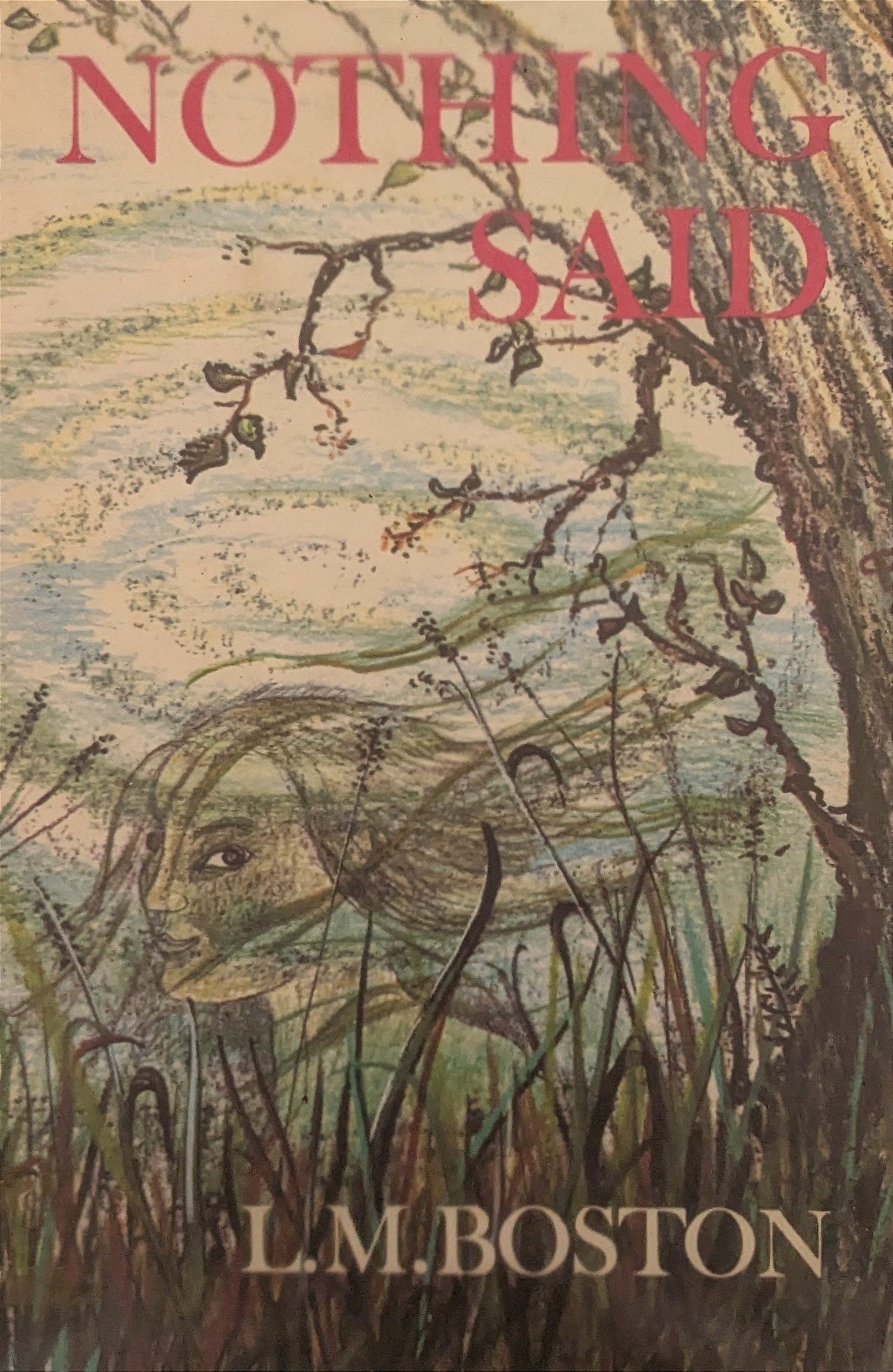
Peter Boston’s cover illustration for the hardback edition of “Nothing Said”.
When you have finished a book that you have loved, the next reading choice is always a delicate one. A book such as The Given World had left such a deep impression that whatever was to follow was bound to stand in its shadow. I needed something that formed a connection, yet was different enough to be read on its own terms.
I pulled Lucy M. Boston’s Nothing Said off the shelf, a slim novella that had been patiently waiting for more years than I care to remember. It is curious how certain books can push themselves forward at a time when it is right for you to read them, and I now realise that this was one of them. It led me not only to a place, but to a way of looking that, for a while, I had almost forgotten.
I first came to The Manor at Hemingford Grey, the home of Lucy M. Boston, some twenty years ago, and had always meant to return sooner, but somehow it had never happened. Last time I visited it was late in the year, the garden topiary was bold and bare in the winter garden: it was the place of The Children of Green Knowe where Tolly had arrived in the Christmas holidays to stay with Mrs Oldknow. If that was a book for winter, Nothing Said is a book for summer. I arrived this time on a day when the heat made the house shimmer. Eager to see the garden, I arrived over two hours earlier than my booked tour, but even with a hat and fan, the sun soon made it necessary to retreat to the shade.
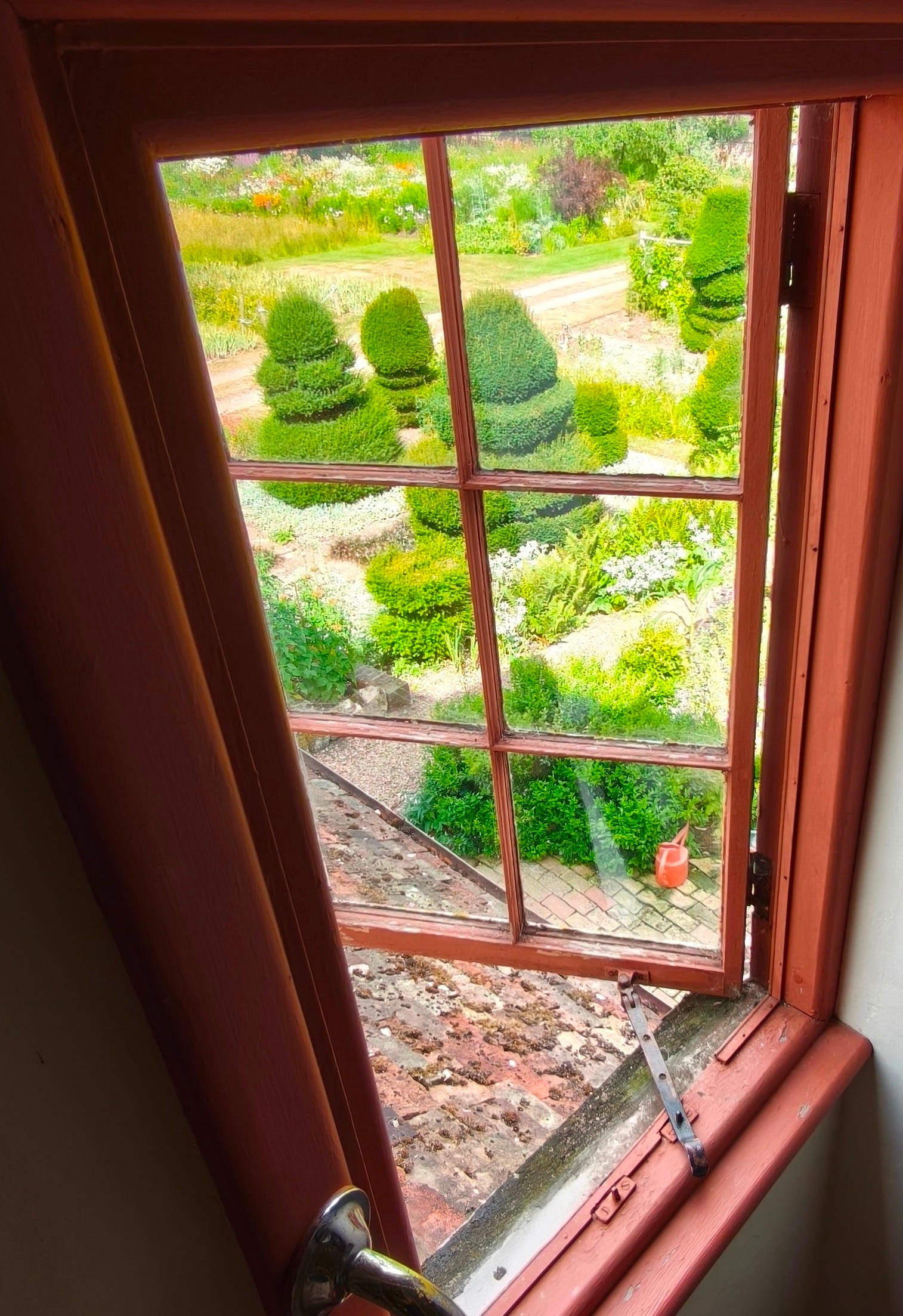
The garden topiary viewed from the house.
A path led down from the house to a wooden gate, and beyond that the River Great Ouse. A woman passed me carrying a plant from the garden and a towel. “I am off for a swim,” she said. Before I could ask where this might be, she was striding ahead, like the White Rabbit, and I decided to follow.
What I saw beyond that gate took me to the pages of Nothing Said. I can’t remember ever seeing such a grand sweep of water before: edged by reeds and willows blanched by the sun, the water dimpled by shoals of tiny, rising fish.
Clusters of duckweed drifted by and a proud mother duck, with three unruly teenagers, swept along to rest downstream in the shade of a canal boat. A moorhen grumbled in the reeds, tidying her nest, and emperor dragonflies glinted across the water.
I walked further along the bank, took off my sandals and dangled my feet in the cool river. Someone’s stray trunks floated by, entangled in weed, and were oddly unsettling. I just sat and somehow all reasons to rush and see everything fell away. I heard a sudden, thin whistle, and a spark of blue lit the reeds. A kingfisher. A perfect gift.
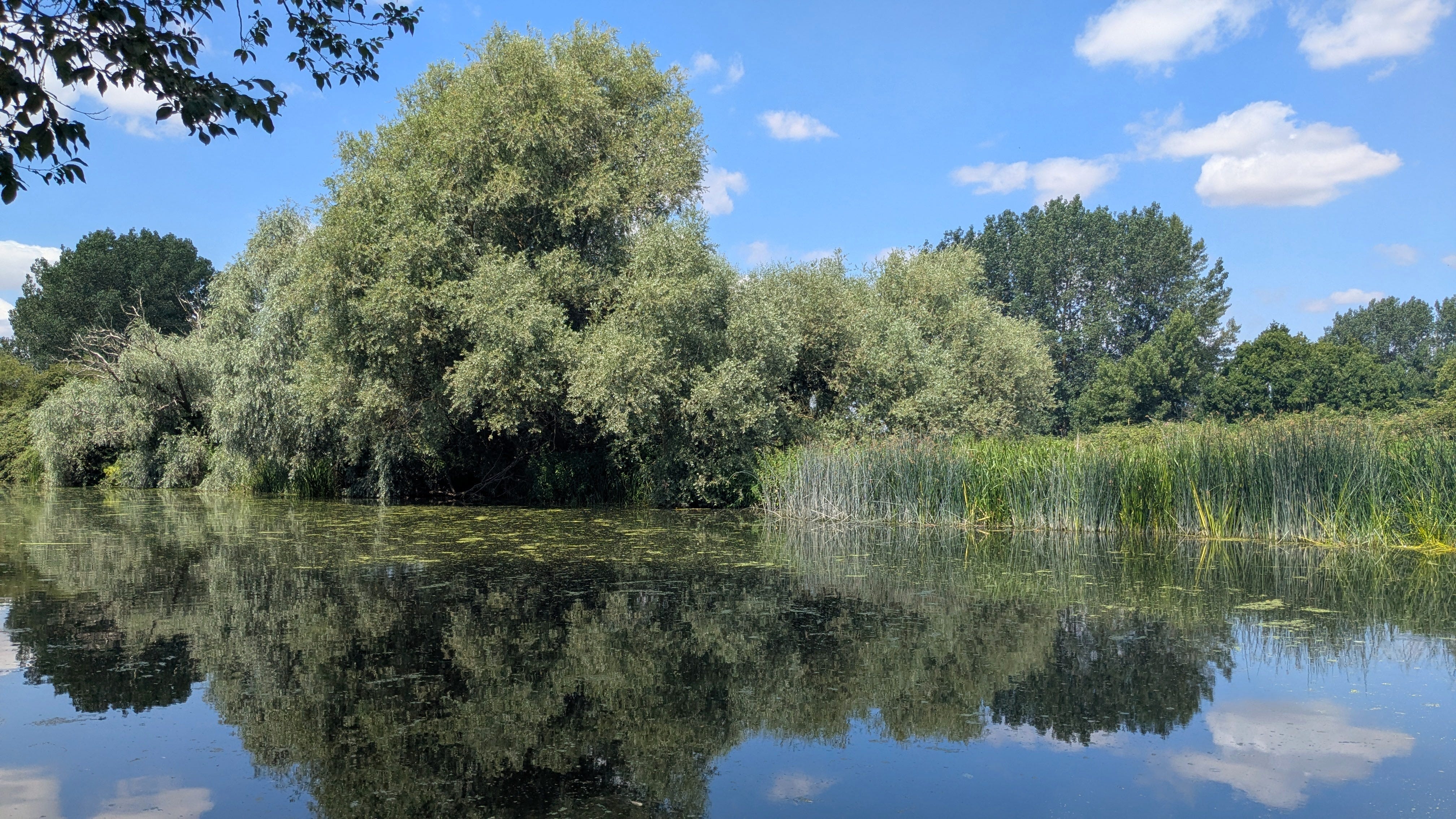
The River Great Ouse, just beyond the garden gate at the Manor, Hemingford Grey.
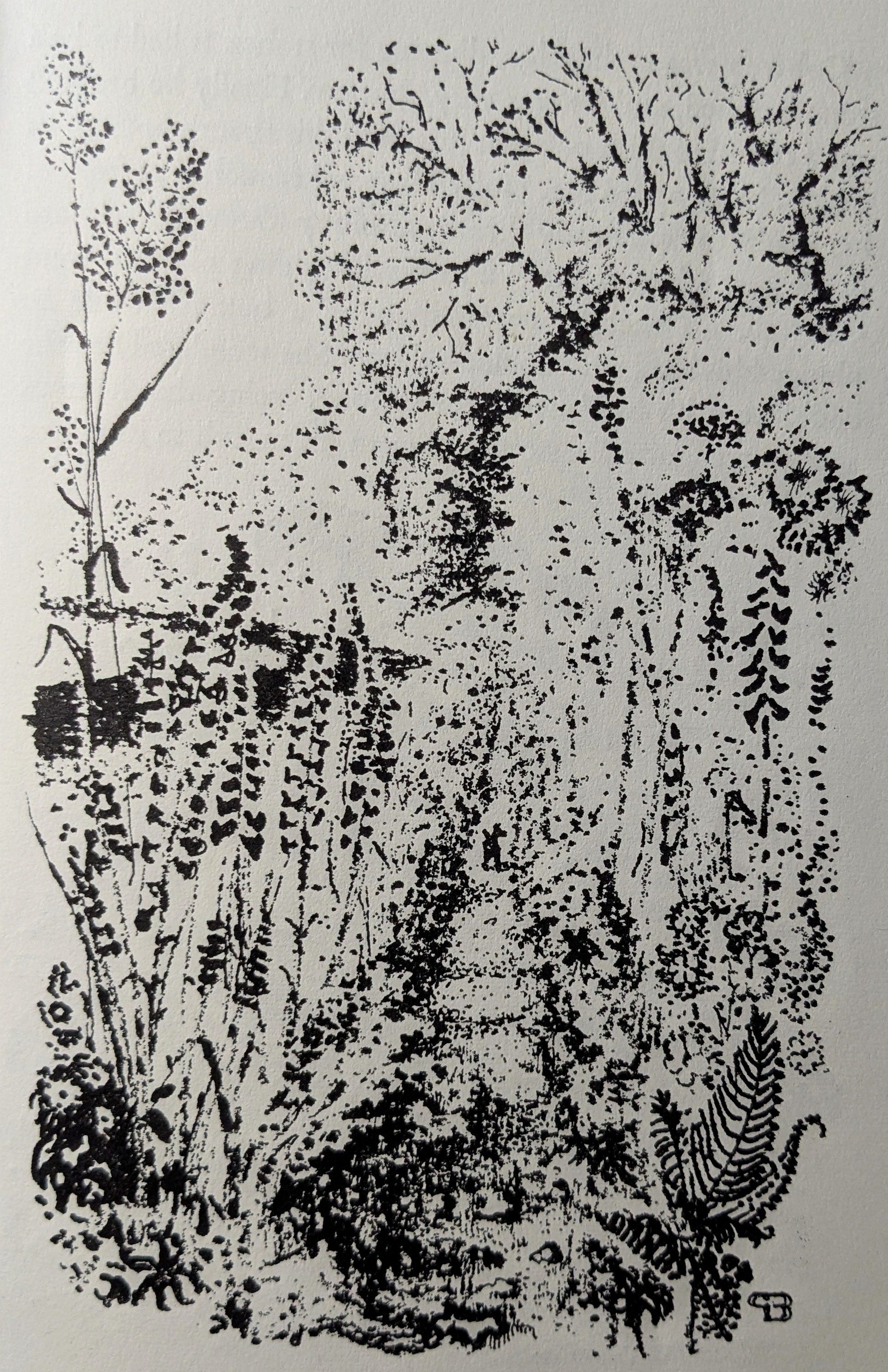
The bleaching light of a summer’s day in dots, dashes and inky blots
Sitting on that river bank was the first time I had stopped to be still, and just paid attention, for the first time in weeks. After endless days of worry, waiting for phone calls, dashes across the country, after mum’s illness, I found myself sitting here with nothing to solve, but to simply to sit and look.
In Nothing Said, I was reminded of Tom’s Midnight Garden. Both novels take a child away from their home unwillingly to a place of adventure, a new and unknown destination that would change their lives. Here Libby has to spend the summer half-term away from her parents, who are off on a conference. Libby is first destined for Aunt Maud, a prospect she greets with a shudder, before Julia unexpectedly appears - who she is and why she is there is little explained - and within a page we are moved to stay at her brother’s home, miles from London. As with Tolly, they arrive at night; “she could no longer see out, but through the open window came a different kind of air, a sweet softness of earth-scents released at night”.
She awakes in a curtained bed, enveloped by greenness, with trees reaching above her. “When the curtains swayed in the moving air the trees swayed and the leaves rippled”.
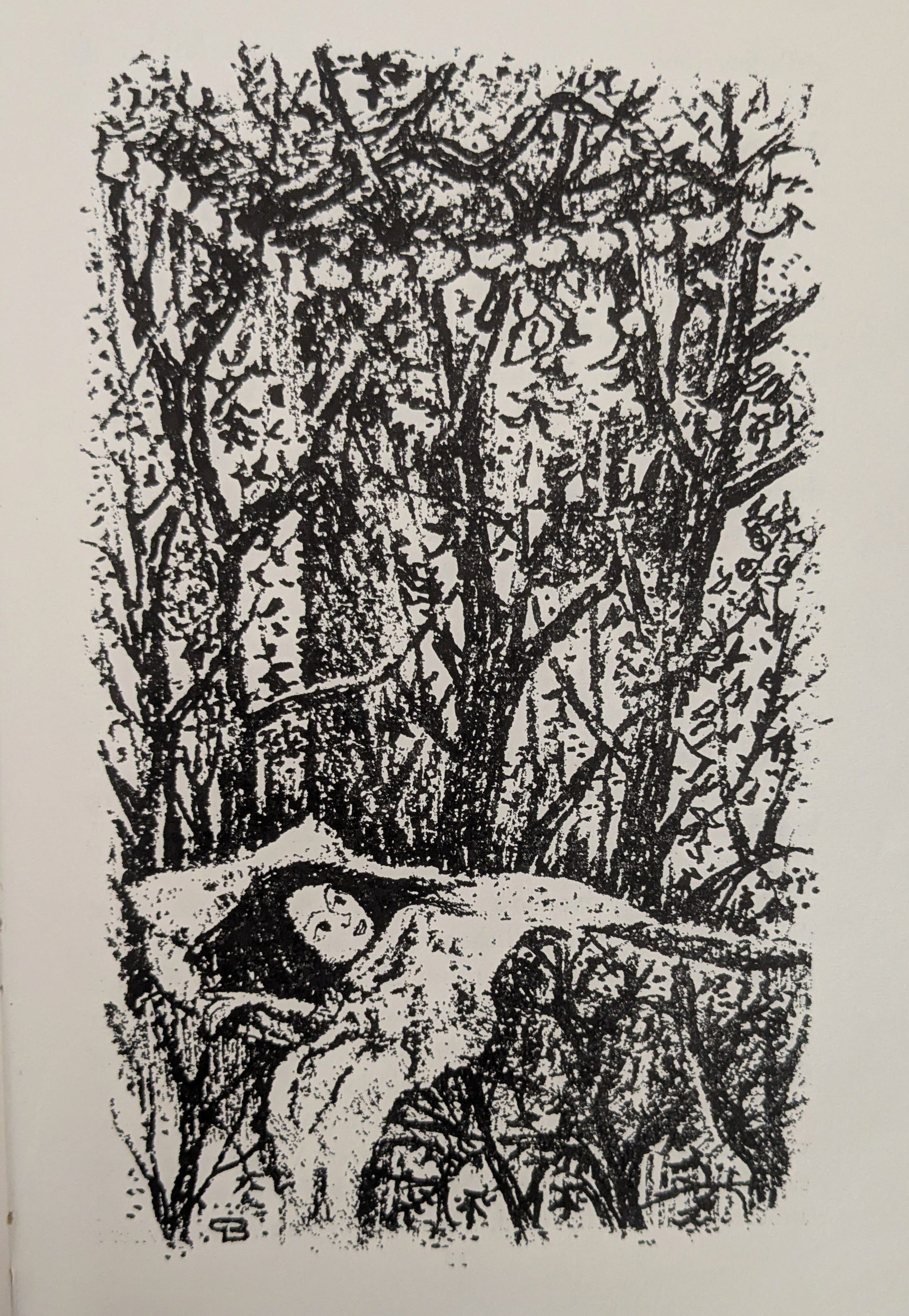
Libby awakes on his first morning with the bed drapes, covered in tree branches, reaching above her head.
While much of the story suggests the Great Ouse and the house of Green Knowe, this river is different. The gravel is replaced by huge flat stones that skirt the water’s edge. I wasn’t surprised to learn that this story emerged after a visit to Yorkshire by Boston, and though the setting itself is not named, she names the river Babble, which has a distinctive voice of its own. This course is not slow and steady but, “Over each smooth boulder it made a waterfall, and under each waterfall there was an eddy with bubbles circling round and round”.
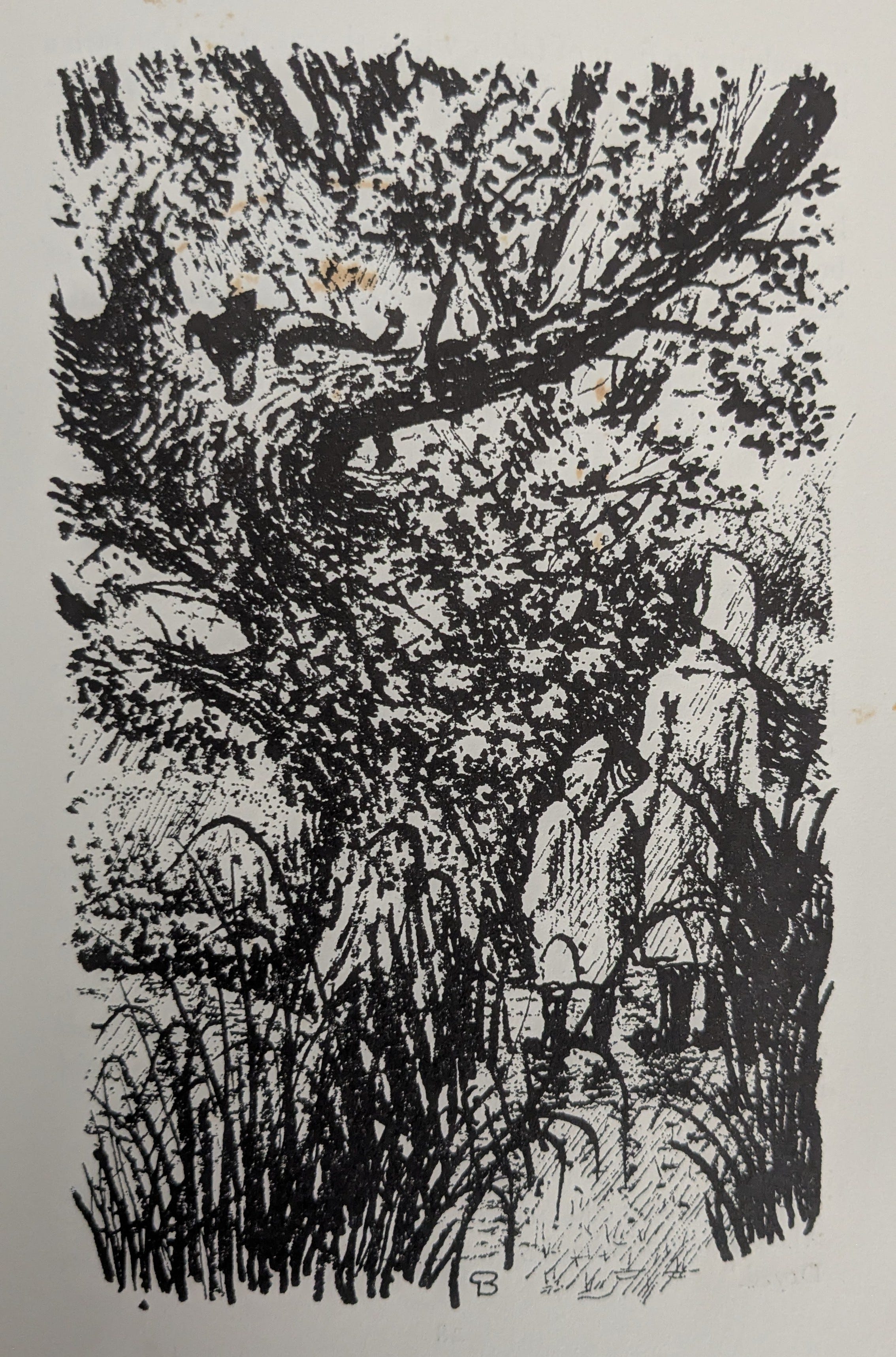
Libby and Julia walk in the rain by the willows, with Cobweb the dog looking down.
This is a book that allows nature to speak. Few words are exchanged between Libby and Julia. Libby’s experiences are not examined, but felt. The shared glances between them are enough. In nature words are not necessary.
This book is illustrated, as are her other works, by her son Peter Boston. Though rendered in black and white, through them we enter further into the watery world. These illustrations are quite different from those in The Children of Green Knowe. This novella was later, published in 1971 when Lucy was 79. Here the crisp, sharp lines, achieved on scraperboard, where the light shines through the winter dark, appear like photographic negatives. In Nothing Said, they are replaced by softer, broken marks. The lines are expressive and free, with sweeps and dots, the summery light filtering through.
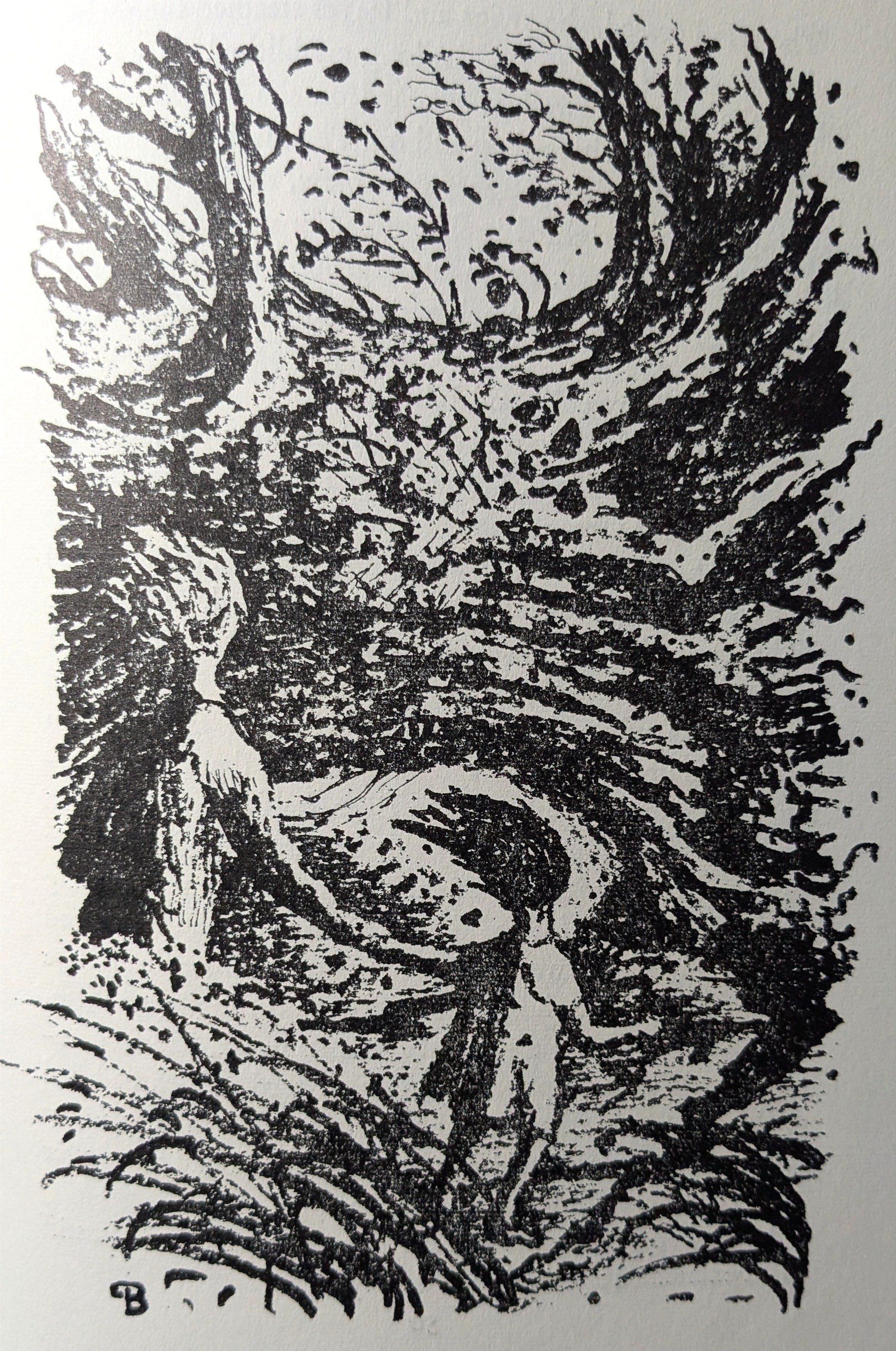
Here we see the power of the storm, pulling at the roots of the willow. In this masterly drawing we see the interplay of light and dark and the rhythm of marks as the wind blows across the page.
I was convinced they were trace monoprints, but I discovered that the difference in texture lay in his choice of paper. The scraperboard drawings were made on a smooth, eggshell-like surface; but these are on dimpled watercolour paper and so the nib skims, disturbing the ink and leaving specks of white paper. The resulting drawings are airy and dreamlike. In these beguiling works, Peter Boston notices what Lucy M. Boston notices. When she wrote the books, she insisted that her son should illustrate them, and it is clear that she was right to do so. This is the ideal marriage of writer and illustrator.
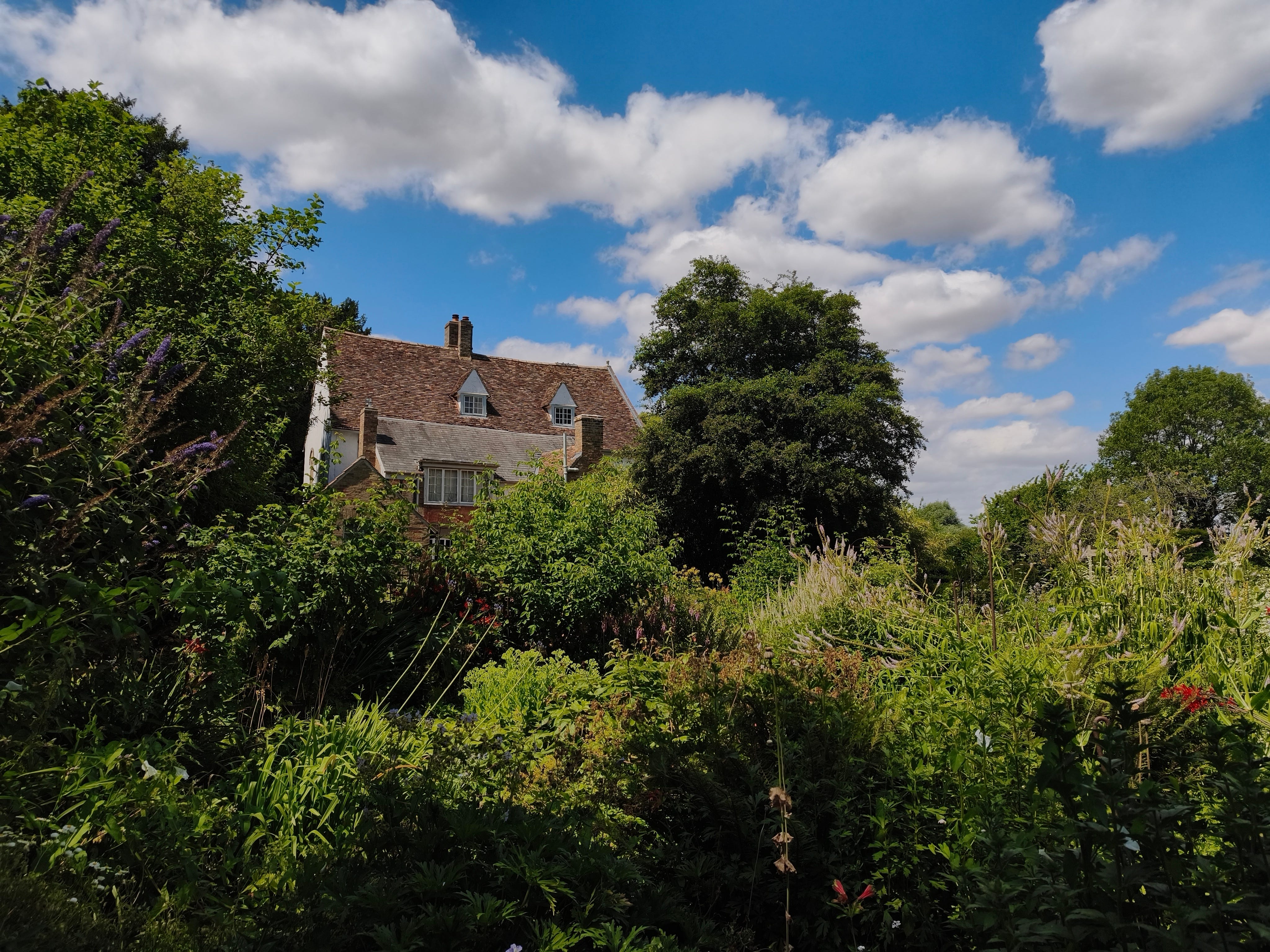
The view of The Manor from the river path
After finishing this book, I went down to my studio, that had lain abandoned in recent weeks, snippets of paper waited just where I had left them. My pencil pots are laced with cobwebs and the skeletons of woodlice have fallen from the skylight. I picked up a pot of ink, and my dip pen, and went and sat on the garden step and drew, with that same stillness I had found on the river bank. This book made me remember something I hadn’t realised was missing. With a little luck, I will be sharing with you the outcome.
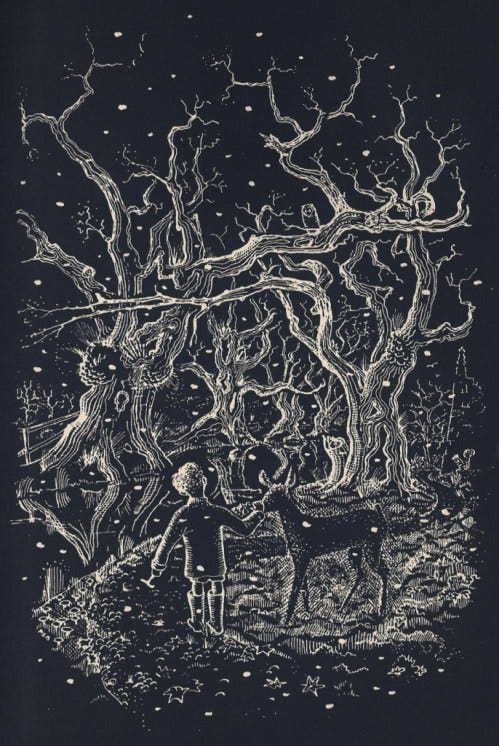
Peter Boston’s scraperboard drawing from “The Children of Green Knowe”. The scraped away marks revealing where the light hits.
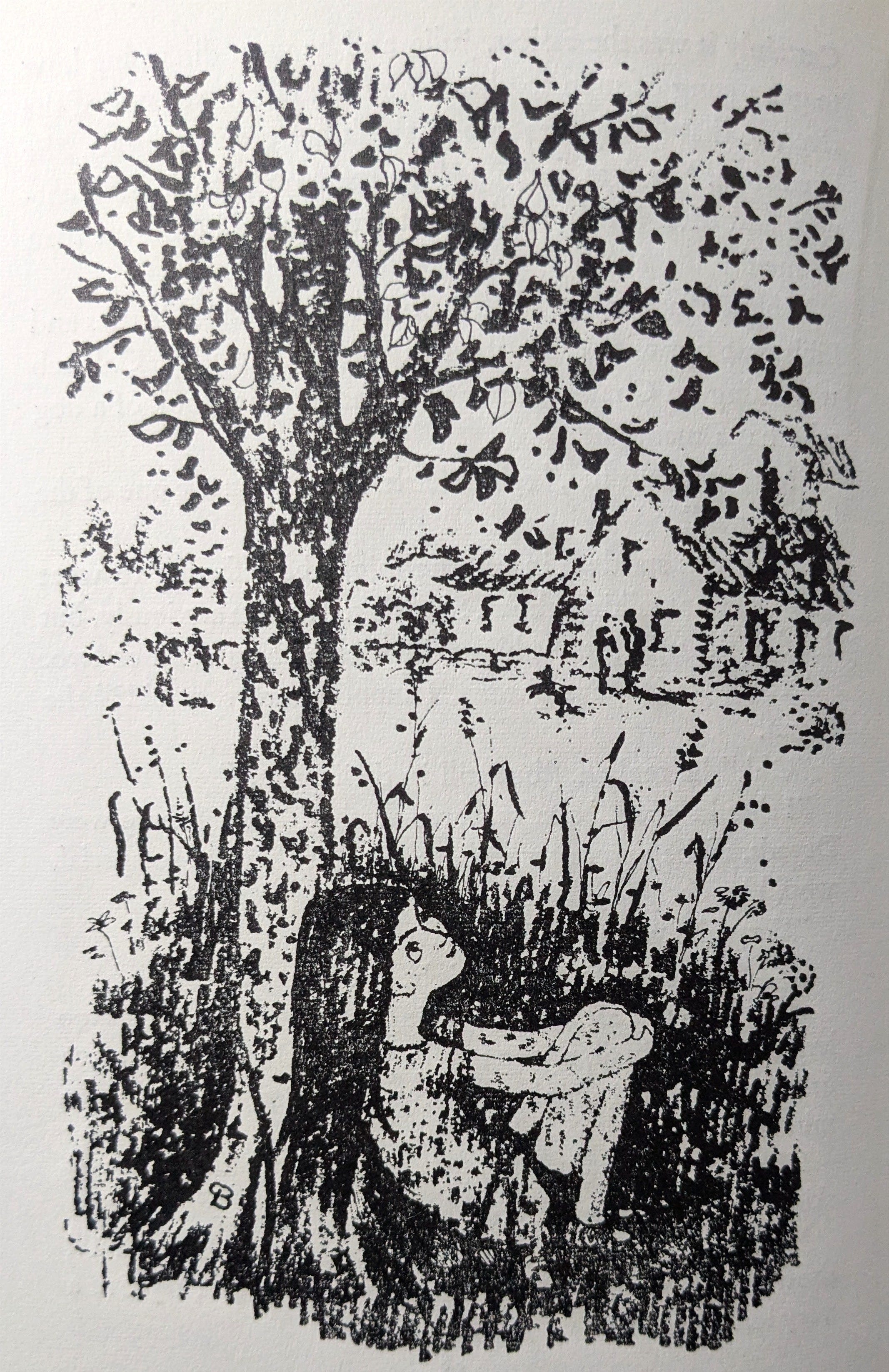
Libby at the end of the novel. I love the dancing variety of marks here: deep, dark smudges and delicate lines for the wild flowers.
Thank you for your patience while waiting for this post. The last few months have been extremely taxing, and I try not to mention personal circumstances here, as this has always been a place of refuge for me, and I hope for you too. However, trying to juggle so much suddenly took its toll. I had planned a week in Robin Hood’s Bay some while ago and, up to the very last minute, I thought I wouldn’t be able to go, but was persuaded that it was the very thing I needed - and I am so glad I went, even if it was for just a few days. I have paused my Paid Subscriptions until 27th July as I feel that was the right thing to do. Those who have an annual subscription will have it extended accordingly. Your support means a great deal to me, and I never take it for granted.
Fingers very firmly crossed for calmer times ahead. As always I would love to hear from you in the comments below. Next time I'll have some exciting news from my search for overlooked women artists and illustrators—sometimes persistence really does pay off. I look forward to seeing you again in a couple of weeks. (PS My monthly Gathering will appear on 6th August where I share a little more of my trip to Robin Hood’s Bay.)
(And please , if you enjoyed thispost, do press the heart, it really helps it to be seen!)
Something to read
Ann Kennedy Smith’s post on Memory in a House, Lucy M Boston’s memoir, beautifully describes her visit to Hemingford Grey.
The Offing by Benjamin Myers
I read this on my last visit to Robin Hood’s Bay and it is my favourite of his novels. The author described the experience of writing as:
…somewhere to escape to during dark winters in Yorkshire, but also I was reading a lot of pastoral fiction, a lot of Laurie Lee and HE Bates. For want of a better word, stuff that’s quite “nice”. I thought the world was getting very angry, bitter and divided. I thought I’d put out something that’s positive, inject a bit of sunlight into the proceedings.
It is a beautiful, uplifting novel of the friendship between Robert and an eccentric older lady, Dulcie. It is a novel of landscape and “sunlight” and the perfect summer read.
You Are Here - David Nicholls
I have been saving this novel for my trip away to North Yorkshire and it was worth the wait. I spent each evening lost in following Marnie and Michael on the Coast to Coast treck, that ends in Robin Hood’s Bay. Funny, touching and captures wonderfully the agony of this walk (I only walked some of it and still have burning thighs!) You can read more here about how he wrote it.
And I must mention Naomi Alderman’s Coach to 5K for reading - timely and brilliant.
Something to Listen to
The Folk on Foot podcast was ideal listening on my journey home, following the A1 back to Norfolk. This episode features Rob Cowen* and Johnny Flynn and is an enthralling listen and the past episodes are a rich seam to be explored.
*I can highly recommend his stunning book Common Ground.
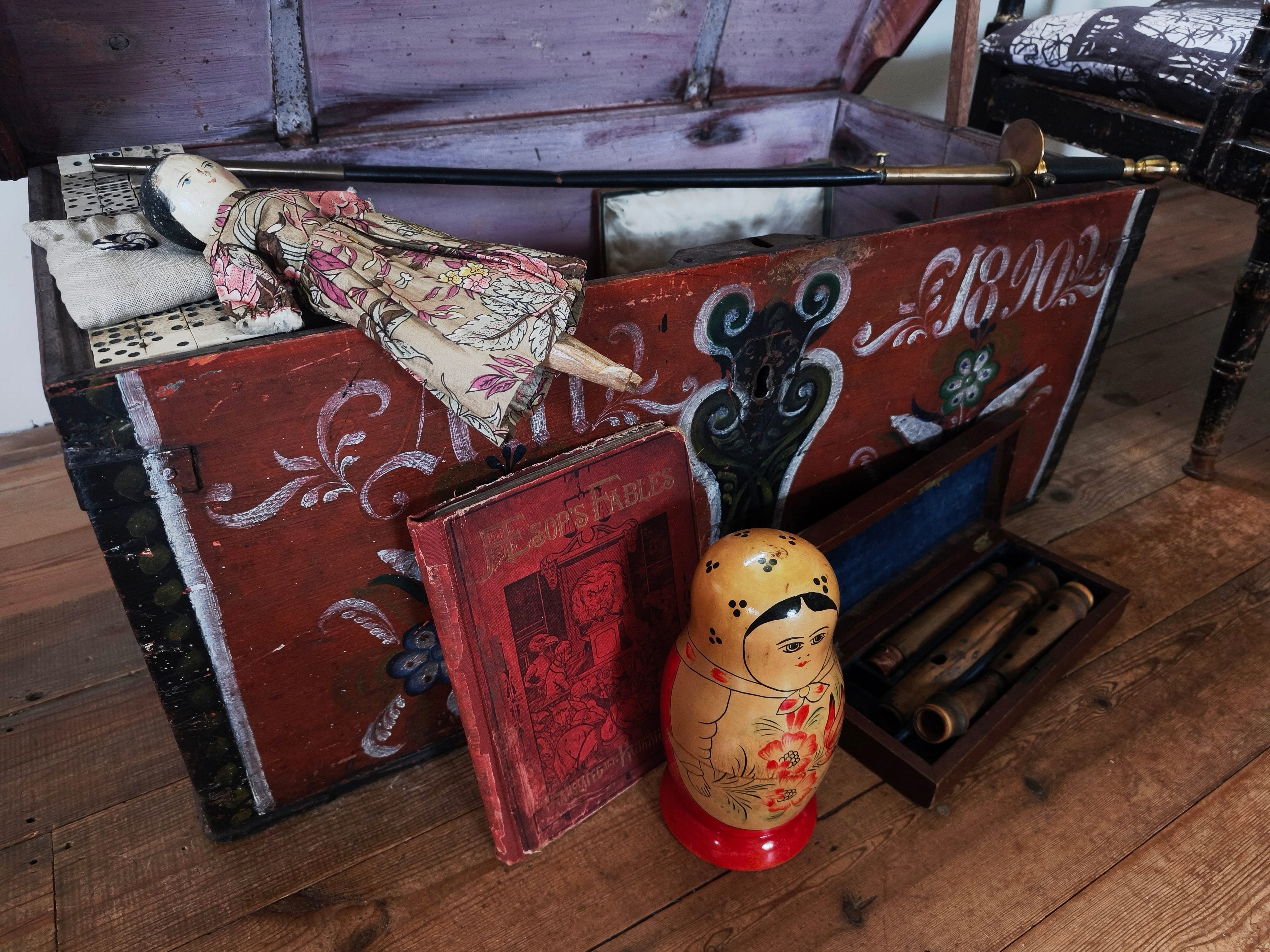
The toy box from “The Children of Green Knowe”, including the whistle and doll that belonged to Linnet
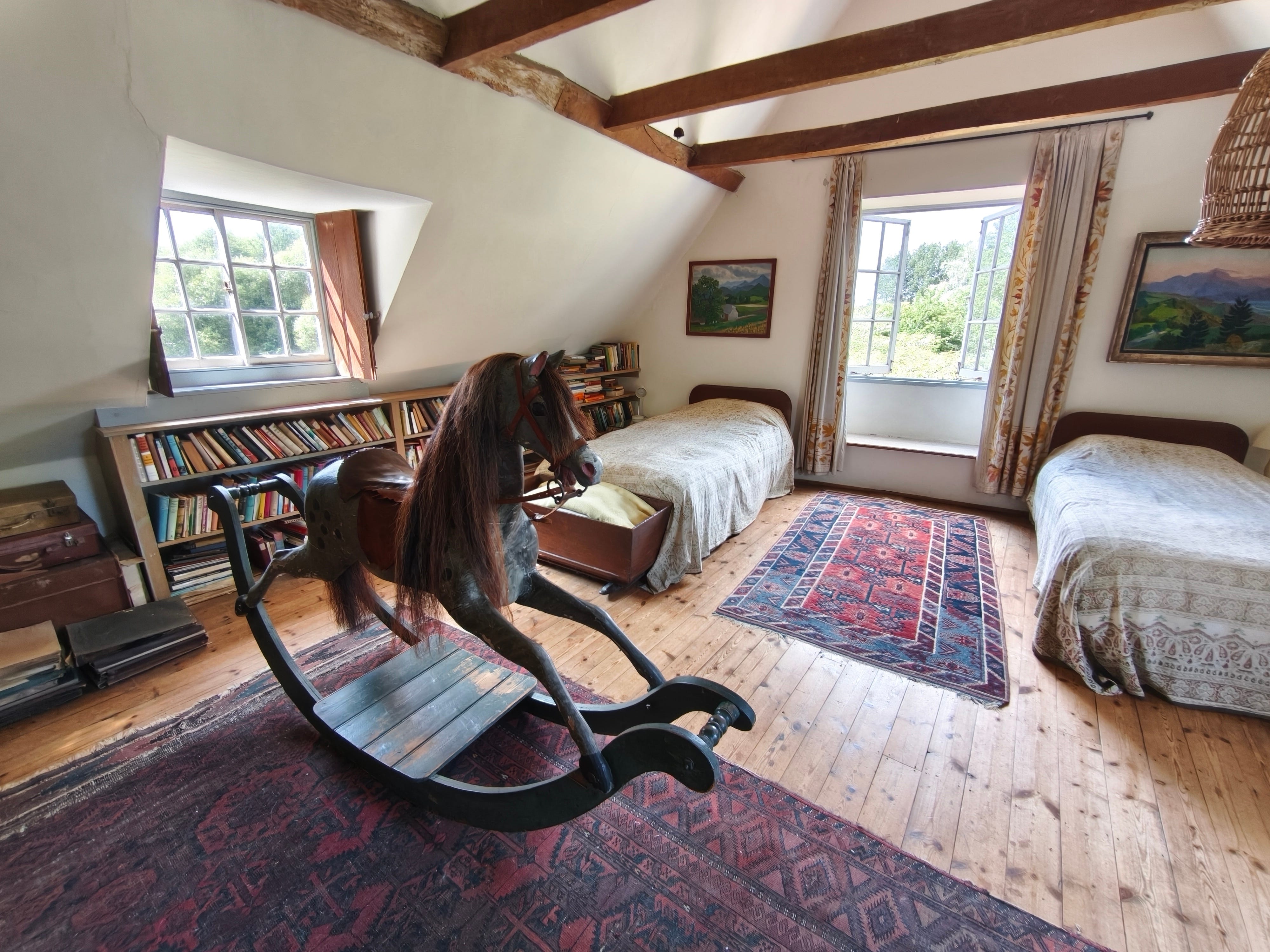
You can visit the Manor at Hemingford Grey, home of the writer Lucy M Boston, by appointment. To enter the world of her books, led by the author’s daughter-in-law, Diana Boston, is an experience never to be forgotten and I can’t recommend it highly enough.
A joy to read, fine writing and wonderful illustrations combine to mirror in itself your reference to the marriage of writer and illustrator. Completely refreshing all round and with tips for books.
Added bonus is inspiration to now get on and play with the unused fude pen rolling about my desk !
"I heard a sudden, thin whistle, and a spark of blue lit the reeds. A kingfisher. A perfect gift.
Sitting on that river bank was the first time I had stopped to be still, and just paid attention, for the first time in weeks. After endless days of worry, waiting for phone calls, dashes across the country, after mum’s illness, I found myself sitting here with nothing to solve, but to simply to sit and look."
Thank you so much for all you share generously. I so appreciate the world of stories and art and beauty your posts open up for me.