
Through the Woods
Agnes Miller Parker, H. E. Bates and the remembered countryside

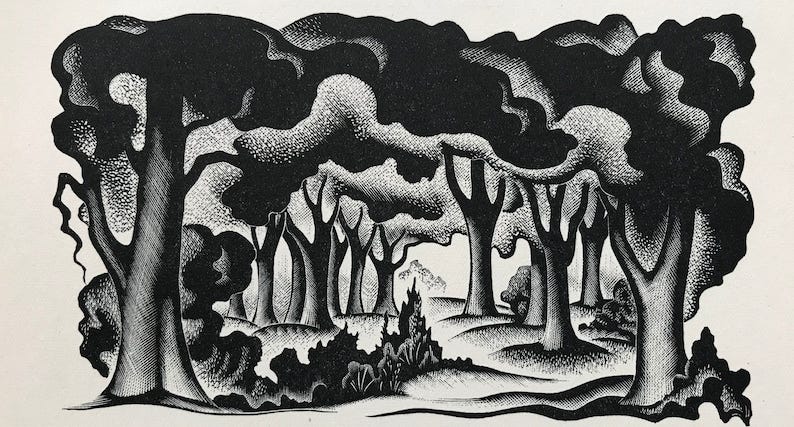
The wood is not far from the house. You can see it, in fact, from the windows. We might as well go straight down to it.
This is how a favourite book begins. Some books do not simply tell a story, but lead us by the hand into another world. Through the Woods by H.E. Bates and Agnes Miller Parker was pulled off a shelf in a tatty bookshop-cum-junkshop in Wolverhampton many moons ago and has stayed with me ever since. Long before I knew anything about wood engraving as a process, I was drawn to black and white illustrations of the natural world. I was fascinated how, through dense black and fine line, the softness of a feather or the stark branches of winter trees could be conveyed and it led me, by way of a very winding route, to here.
This week’s piece is, in part, about a female artist you may not know, but it is also about the marriage of writer and illustrator, and how, in the finest examples, one deepens our appreciation of the other. H.E. Bates and Agnes Miller Parker, it seems, never met, and the only contact made was via their publisher, Victor Gollancz, but the book published in 1936 became a runaway success. It grew to become one of Bates’ most beloved books, and brought further commissions and critical recognition to Miller Parker, at the age of forty.
As I have come to realise with so many women illustrators of this period, there are scant details available about her life. Born in 1895, in Irvine, Ayrshire, she studied at the Glasgow School of Art from 1911 to 1917, and studied not wood engraving, but painting. She married her fellow student, William McCance, in 1918 and his tender drawings of her are revealing of their early happiness.
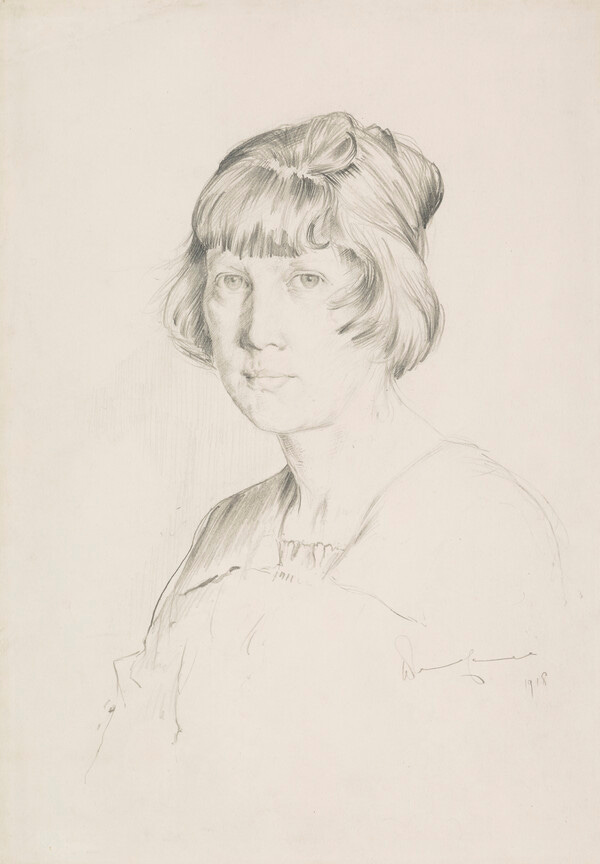
Portrait of Agnes Miller Parker by her husband William McCance (1894 - 1970), pencil on paper, 1918, 34.00 x 24.00 cm, Scottish National Gallery of Modern Art
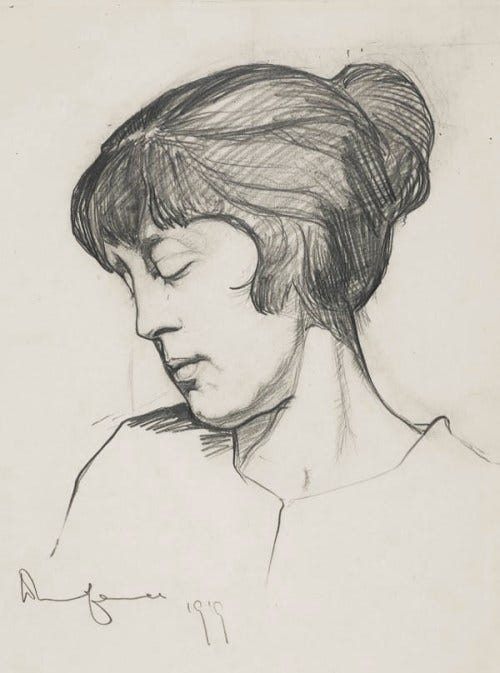
Drawing of Agnes Miller Parker by William McCance, pencil on paper, 1919, National Galleries Scotland
Both were highly influenced by Vorticism, the short lived art movement propounded by Wyndham Lewis. The angular, geometric figures in her painting, The Horse Fair (1928) reveal how different her early work was - filled with colour and energy, yet has beautifully observed details: a couple tenderly embracing, the shady central figure clutching his note while the horses are being displayed to prospective buyers.
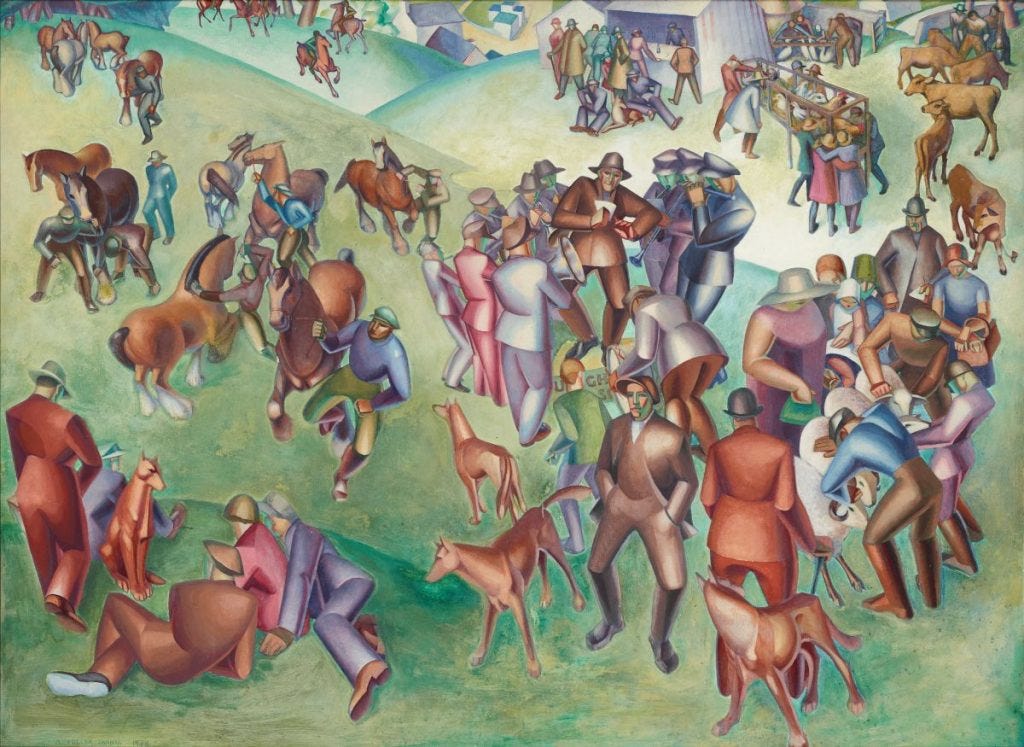
The Horse Fair, 1928, tempera on canvas
81cm x 109cm Credit: Lyon & Turnbull
Another tempera painting made two years later, The Uncivilised Cat, is softer, though it still retains the sharp modernist angles of her earlier work. The first of her works to depict her adored cats, it has some intriguing details. A speeding red sports car zooms past the window, the cat lands on the table disturbing a still life composition, tipping a vase of Canna lilies, overturning a glass and plaster figure and placing its paw on a single pound note. The books beneath it are Marie Stopes’ Love’s Creation, which explores female independence and sexuality and Robert Graves’ Goodbye to All That. Make of that what you will, but it does reveal a certain wit and certainly suggests a modern thinking young woman.
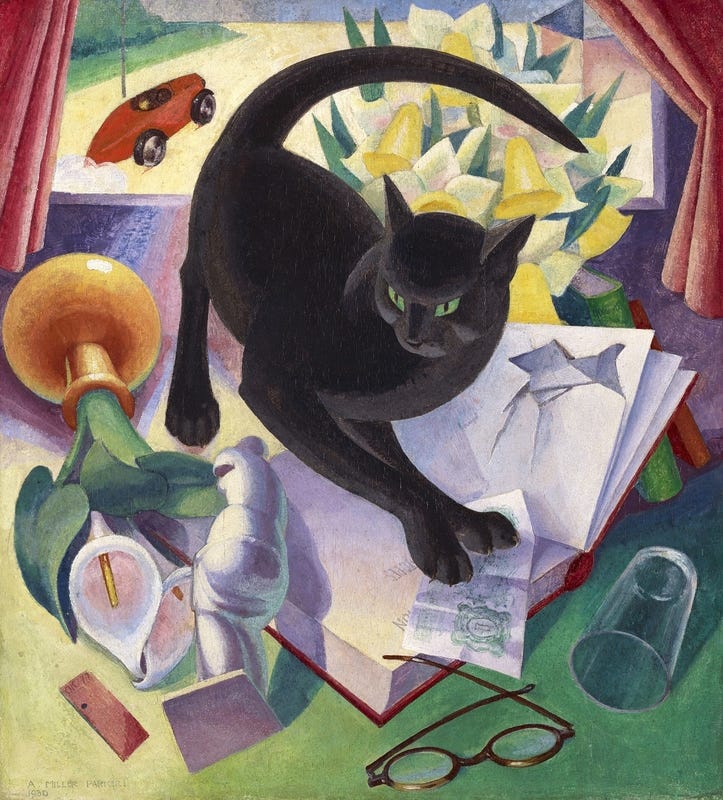
The Uncivilised Cat, 1930, tempera on board, 52.7 x 47.6 cm The Fleming Collection
In 1930, they moved to Wales, to work at the private Gregynog Press in Newtown, owned by the Davies sisters, wealthy supporters of modern art. They worked alongside Gertrude Hermes and her husband Blair Hughes - Stanton and the four became its resident stable of artists. Agnes’ first prints were made in lino, but here she began to learn wood engraving under the guidance of Gertrude Hermes. She later wrote, “I feel I’m in your debt and can never make up for everything you and Blair did for me”. For they gave her not just her medium, but here too she found her subject.
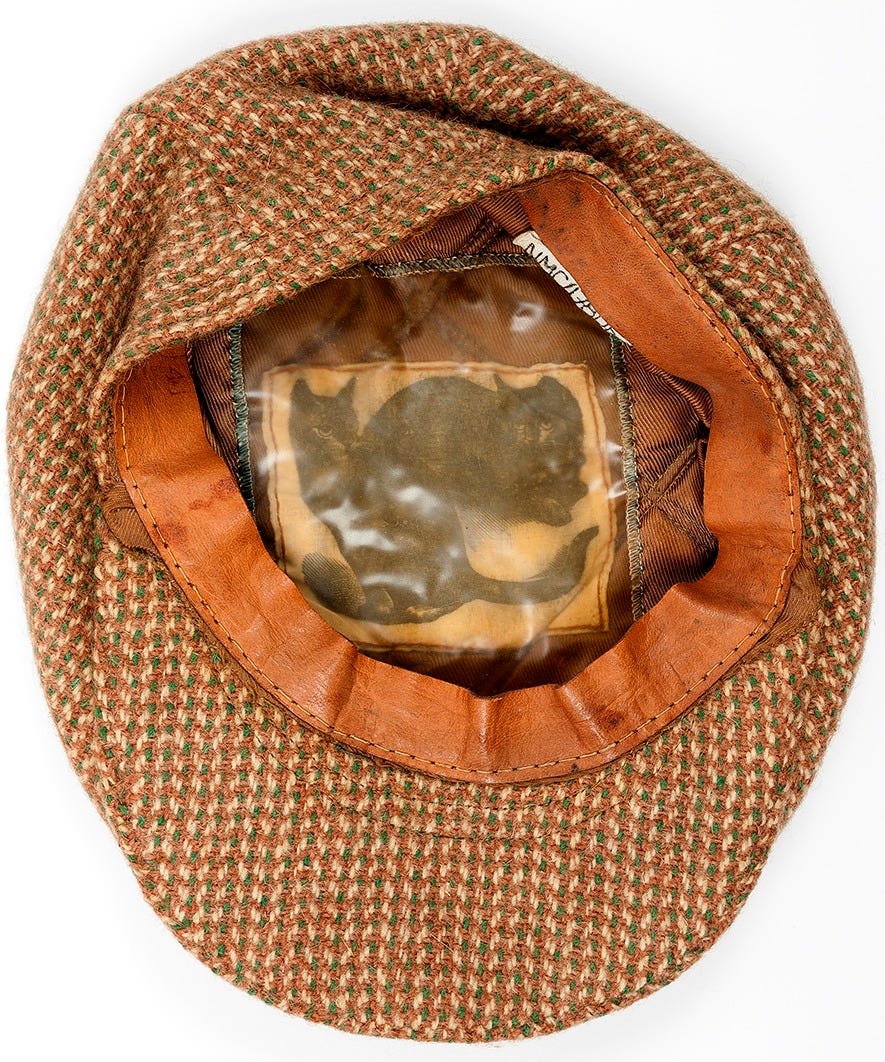
Tweed cap with her secret engraving of Minnie and Jennie from Glasgow School of Art archive
The Glasgow School of Art archives hold a touching relic of their marriage: a tweed cap that hides a transparent pocket containing one of her early engravings of their cats, Minnie and Jennie.
Among the circle of writers and artists at Gregynog, was the writer Naomi Mitchison, who offered a different slant on their marriage. She described ‘Mac’ as “something of a phoney” who considered himself ‘a D. H. Lawrence type-genius.’1 It was Agnes, however, that kept them financially afloat through teaching. She believed her to be the better artist who was “forced into practising ‘mousemanship’”, a very telling phrase.
In addition to her teaching, Agnes took on commissions, notably by Robert Gibbings of the Golden Cockerel Press, including The House with the Apricot, a novella by H.E. Bates in 1933, printed in an edition of just 300. Private presses such as these, while able to print fine quality engravings, were expensive to produce and the limited number of works produced meant very little income for the artists, especially in the depressed conditions of the period.
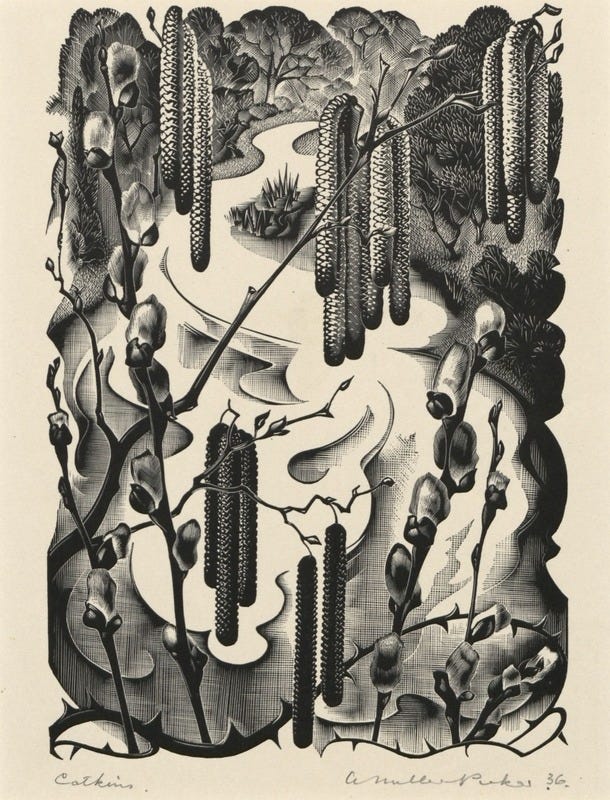
Catkins, 1936, wood engraving on paper, illustration for “Through the Woods”, Aberdeen Art Gallery
But technological changes to the printing process in the mid 30’s meant that artist quality print could be mass produced allowing their work to be seen by a much wider audience. The commission for Through the Woods certainly changed her fortunes. For this she produced 73 engravings. We know that H.E. Bates had less than a year to write the text, extending existing articles as part of the work out of necessity. For Miller Parker, such a time frame must have meant many hours of dedicated work, yet what she produced was of the highest quality.
A frustration of this artist is that we have no preparatory studies to these works. While such prints must have evolved from detailed sketches and observation, only a few of her drawings have survived of her work as a whole. Some are housed in the Glasgow School of Art archive, however there are no images to be seen.
We do know that she was happiest drawing in a woodland, or on a river bank, and that one of her favoured occupations was fly fishing - a pursuit that also requires great patience and would have allowed her to observe wildlife closely. What is evident from the prints is that they are born not just of recording nature, but from knowing it. The plates are not invented compositions, and though they demonstrate a strong sense of design, they have come through an intimate familiarity.
A wood engraving is made using the endgrain of hard wood, usually box or pear, and the light is carved away; what remains becomes the print.
It is delicate, focused and time consuming work. What distinguishes her prints is not just the subtlety of her mark making, but the fine tonal contrasts: she captures the way light touches the back of a moorhen or the density of a fox’s coat. While they are monochrome, they somehow retain the colour and fully lived memory of the creature and the stylised form doesn’t detract from this: we feel them just about to pounce or take flight.
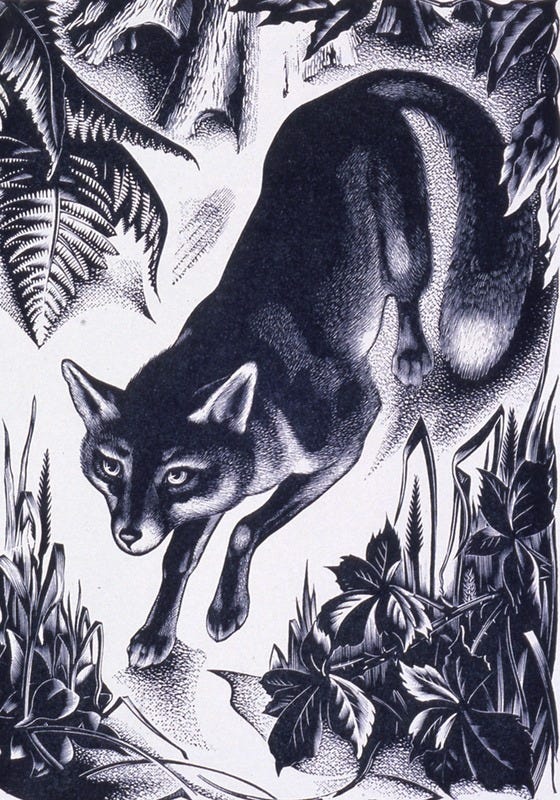
Fox, 1936, wood engraving on paper, illustration for “Through the Woods”, Aberdeen Art Gallery
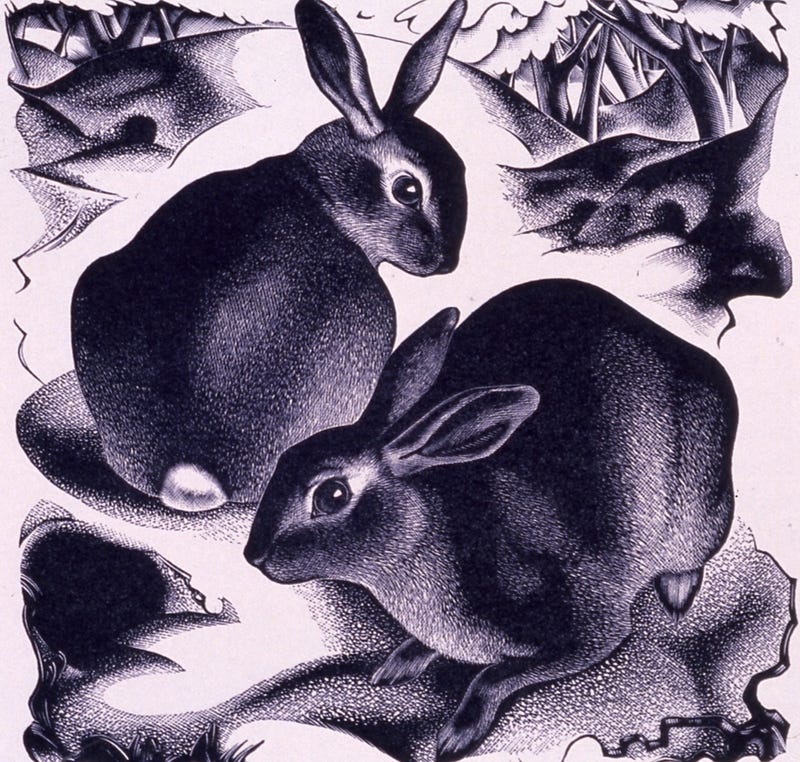
Two Rabbits, 1936, wood engraving on paper, illustration for “Through the Woods”, Aberdeen Art Gallery
A particular favourite is below. She carves plants with equal sensitivity. Here we see a bee poised to leap inside a foxglove, the unfurling fronds of ferns, while honeysuckle entwines the piece, just as it would in the depths of the wood. Her engravings have no framed boundaries, their spaciousness allowing no interruption to the text. They slow us down and allow us to linger a little longer.
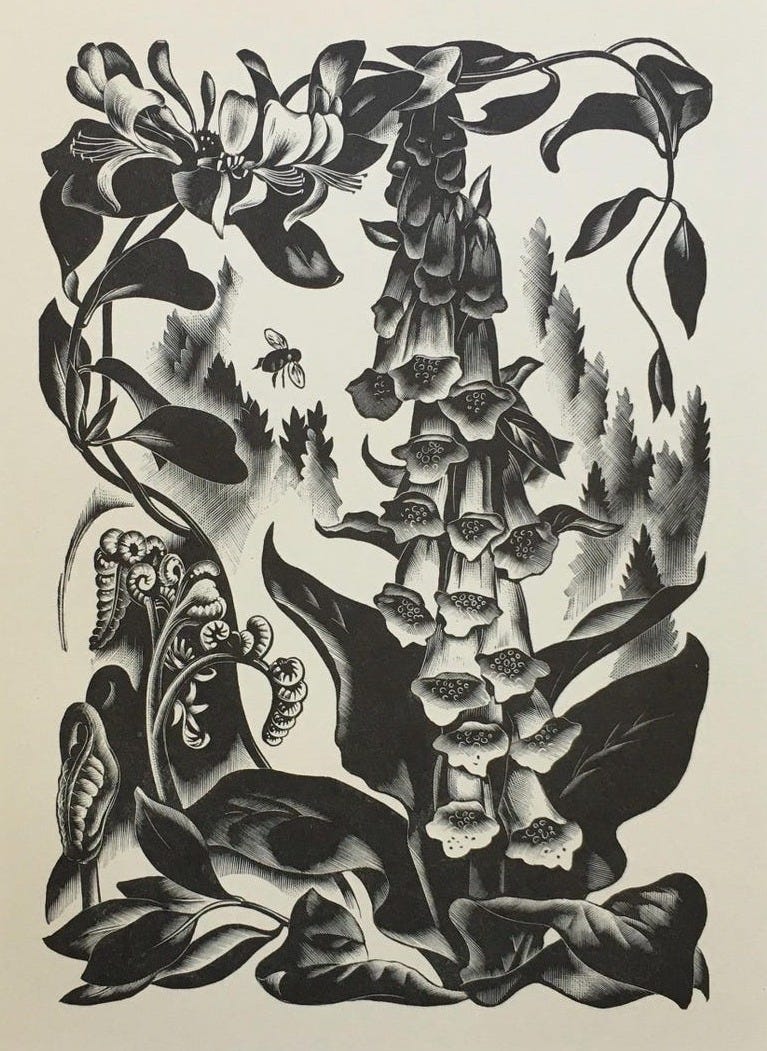
Foxglove, Honeysuckle and Fronds 1936, wood engraving on paper, illustration for Through the Woods
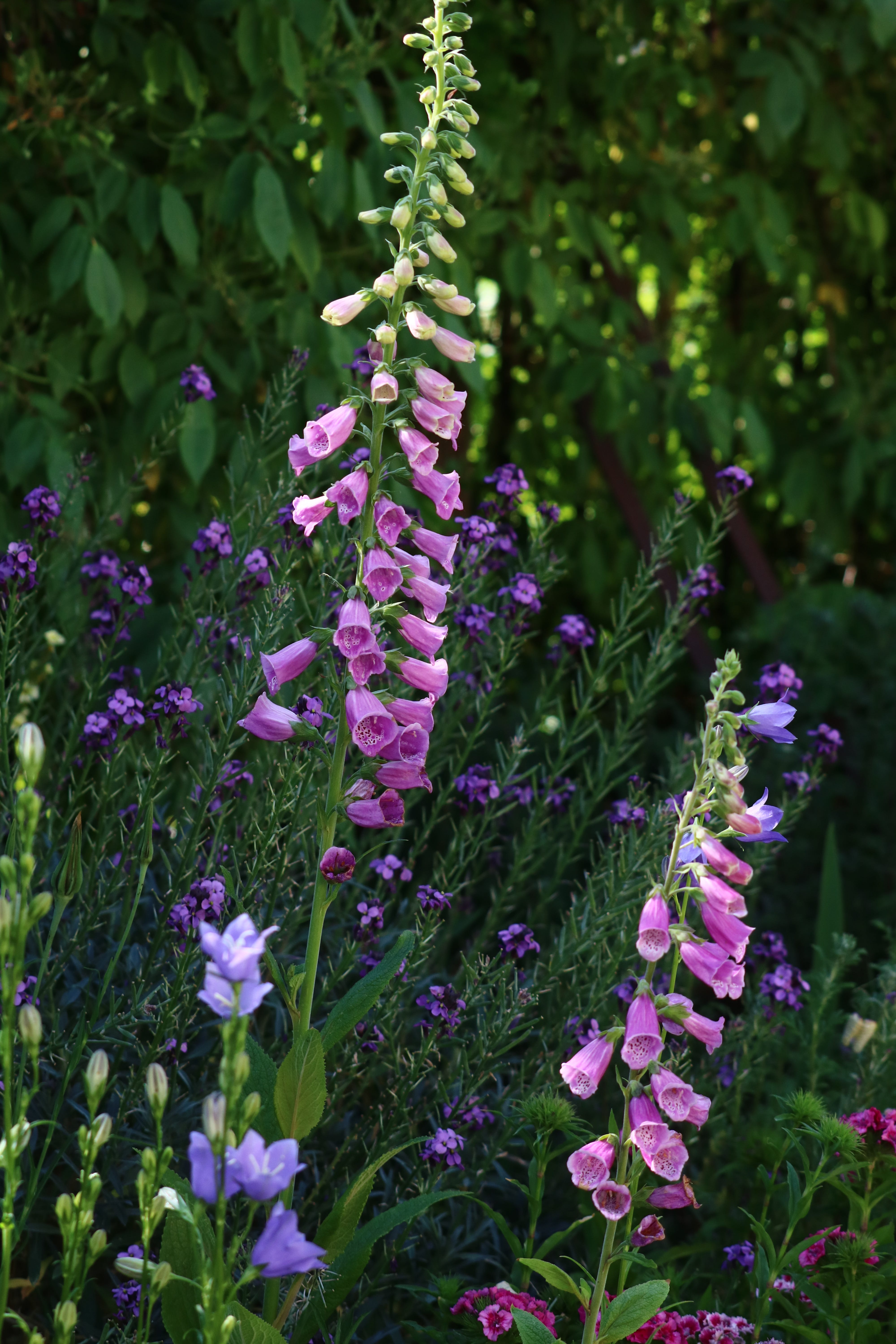
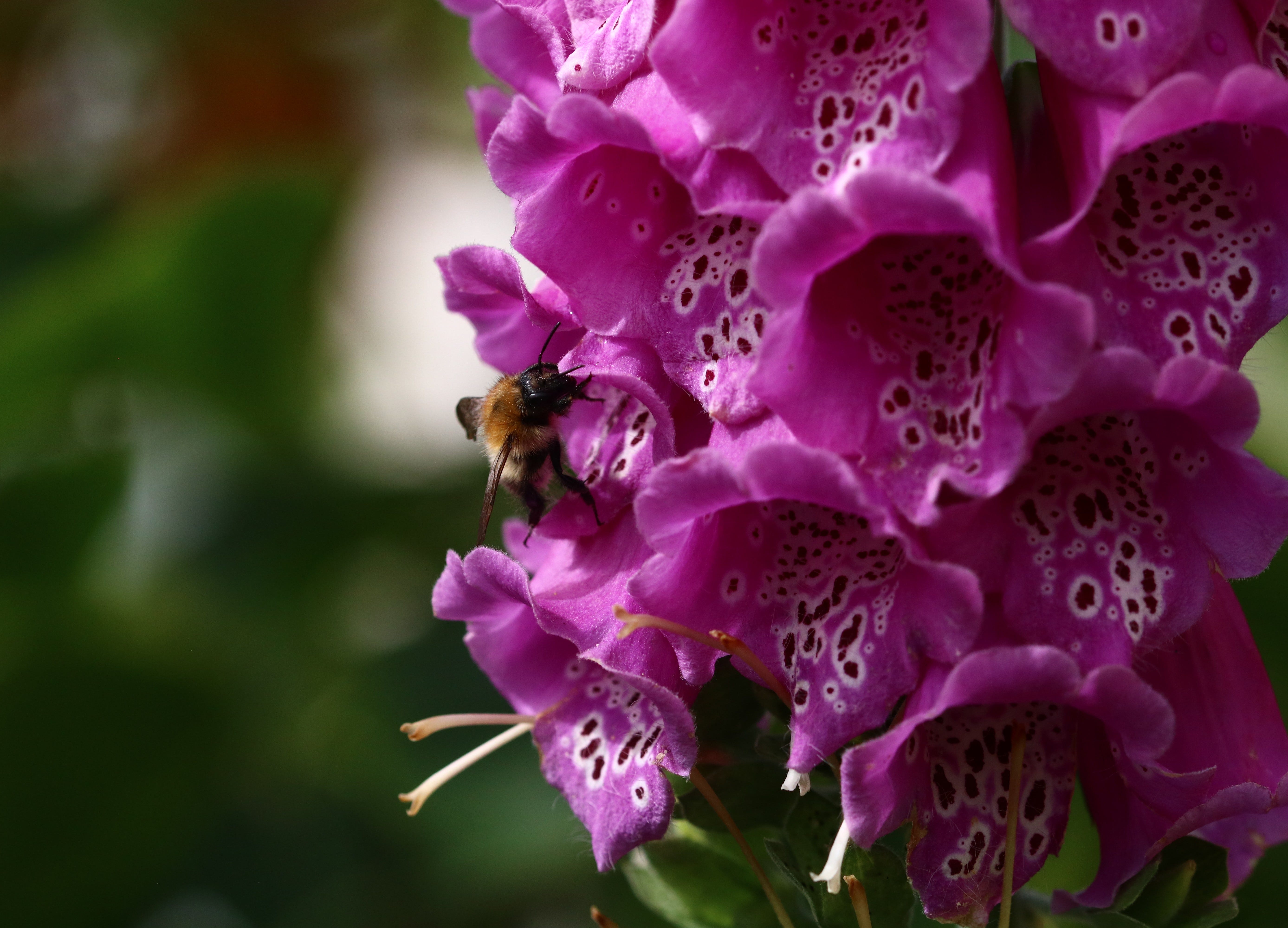
Bee-watching in the garden
In 1955, her marriage ended and she returned to Scotland, to the Isle of Arran, where she lived quietly for the remaining decades of her life. Quite solitary by nature, she continued to produce extraordinary work, including illustrating five volumes of essays by the naturalist Richard Jefferies for the Lutterworth Press, another perfect alliance of writer and artist.
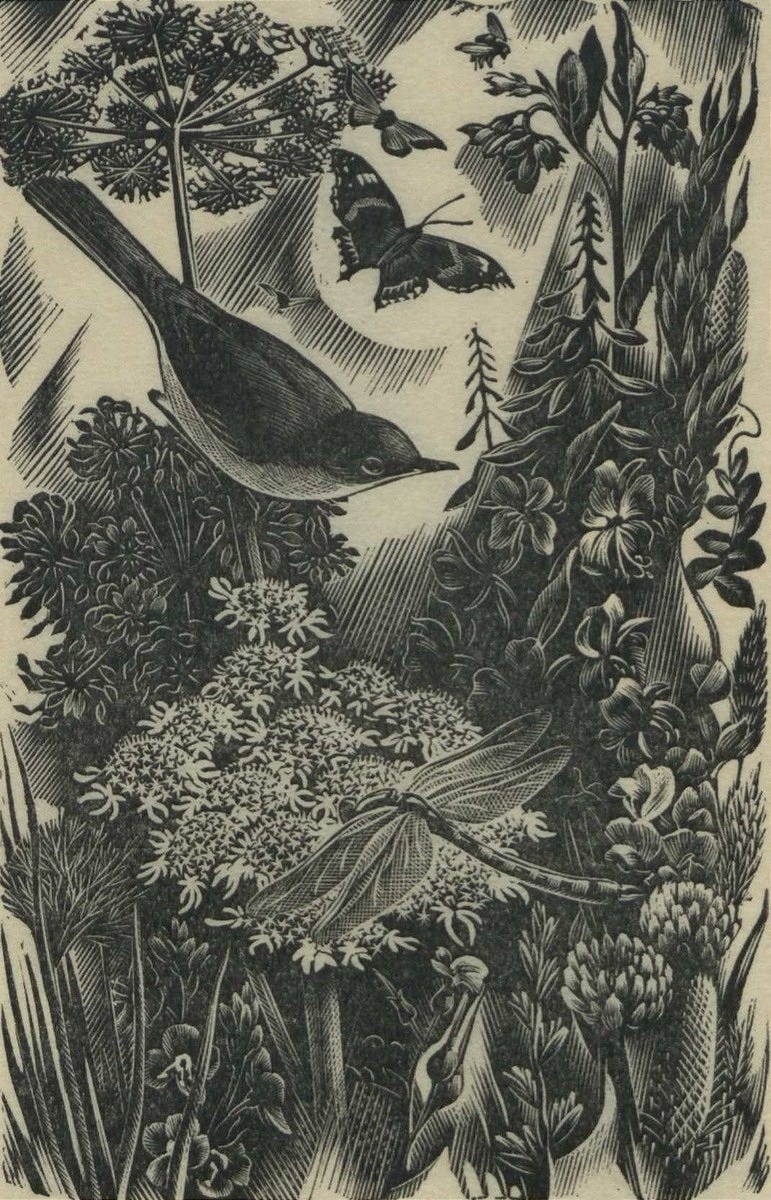
Pageant of Summer, wood engraving, published, 1949, from Richard Jefferies, Aberdeen Archives, Gallery & Museums
Herbert Ernest Bates was born in 1905, in Rushden, Northamptonshire and while their disciplines were seemingly very different, both worked from attention and deep-rooted memory. As a child, in fact, he wished to be a painter, but on discovering writing, “words [became] a form of paint”.2 He described how walks with his father through the local woods of his childhood were “etched” upon his memory, and much of what he writes in this book is not recent observation, but from what had remained with him since boyhood.
The 1930s were a period of great change, and Bates was conscious of a disappearing world. He writes of the countryside not as a decorative backdrop in his work, but something that shapes the lives and imaginations of his characters. It was the age of rising tourism, weekends away and arterial roads were carving into the countryside. Rural England was changing rapidly. This sense of encroaching danger is reflected in the popularity of books about rural life during this period, when writers such as Adrian Bell, A.G Street and the publication of Flora Thompson’s Lark Rise to Candleford in 1939 , offered comfort and sanctuary to readers and a sense of armchair nostalgia. Through the Woods was followed by the equally successful Down the River in 1937, with 83 illustrations by Agnes Miller Parker.
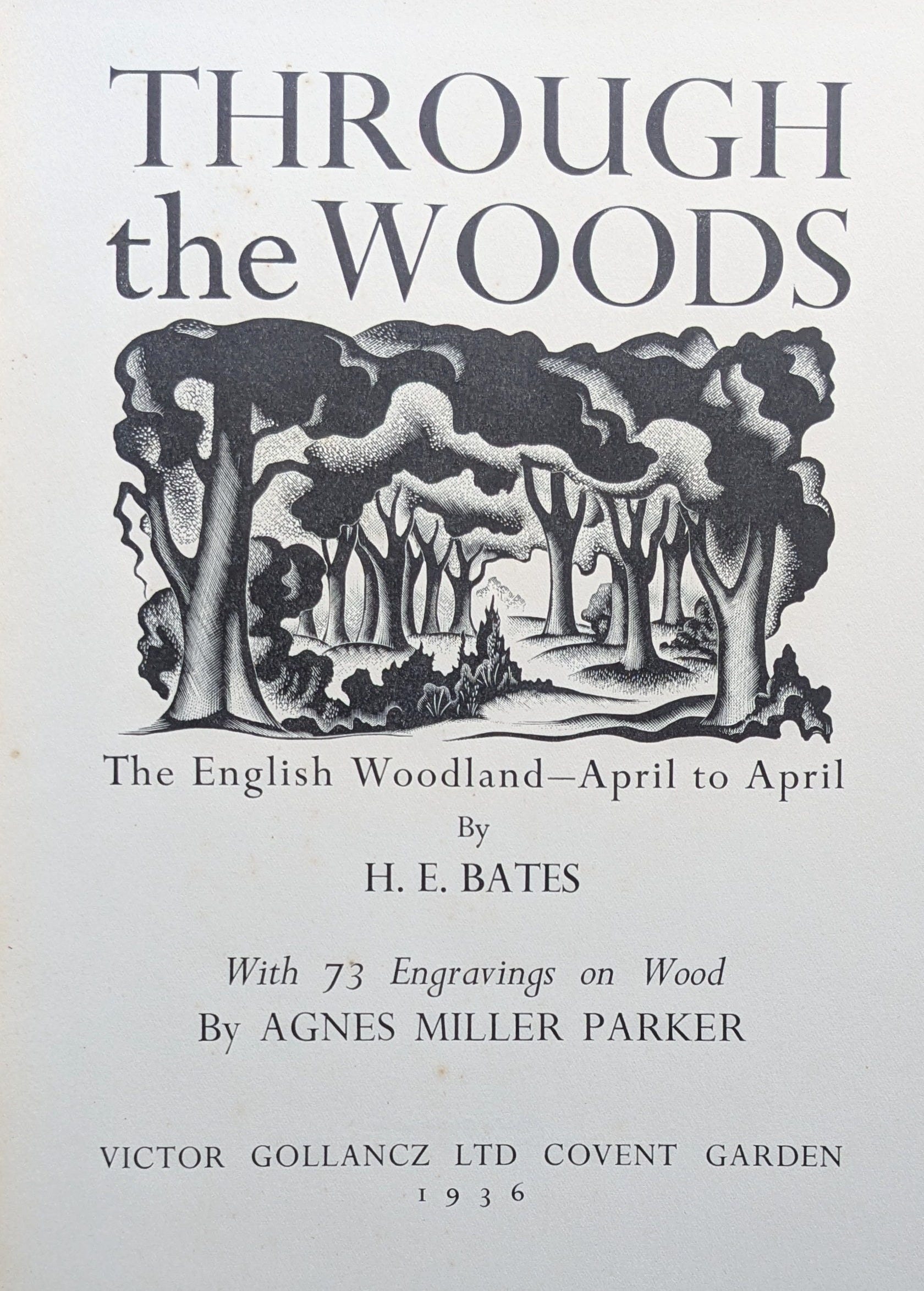
The frontispiece of Through the Woods - note the writer and illustrator receive rare equal billing
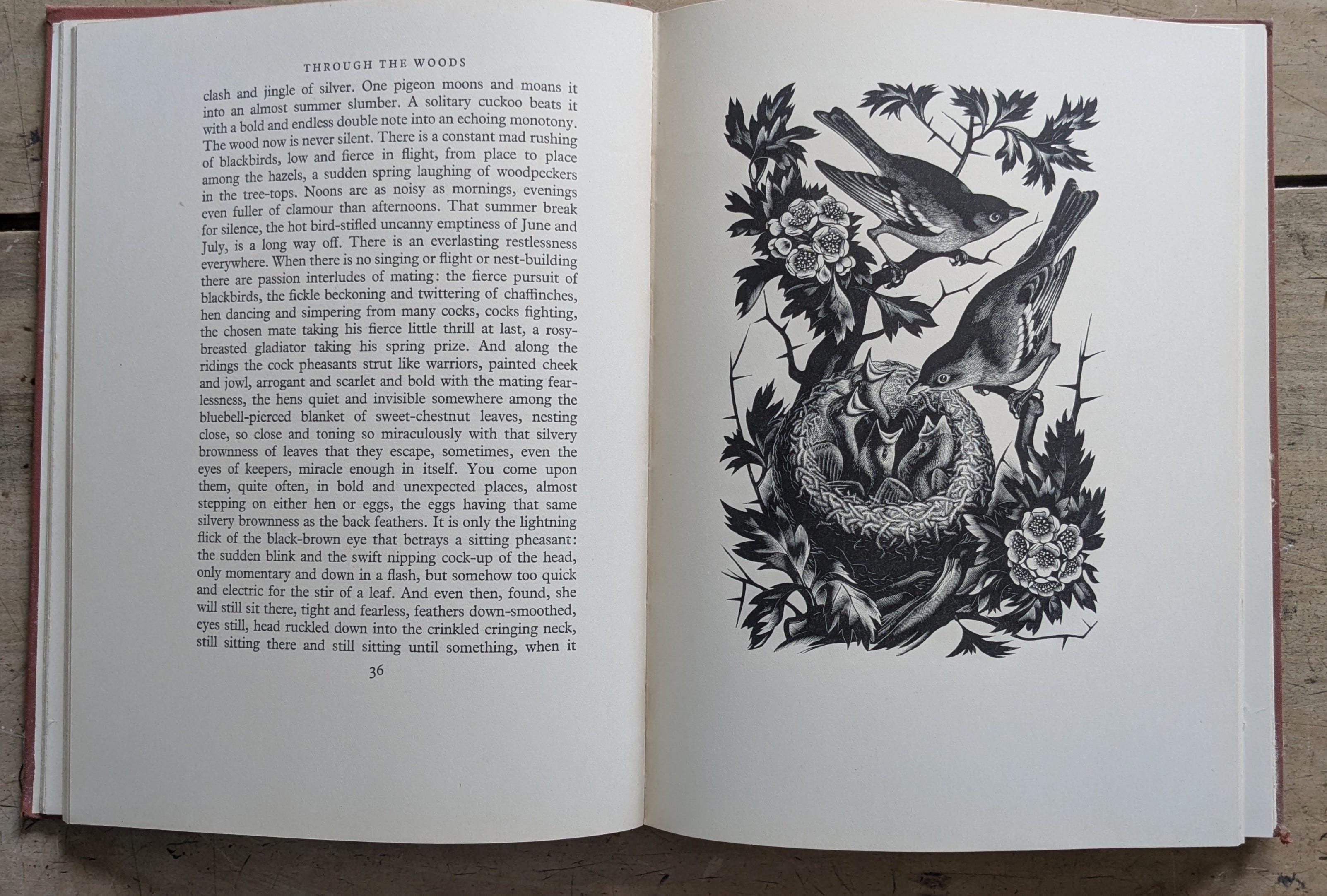
Both books were reprinted by Little Toller in 2011 and 2014, respectively, bringing them to a new audience. Their focus on attentiveness and the value of observation is as vital now as it was then.
Bates left the Midlands following his first literary success. Gaining a place at university, he was unable to attend, as his family couldn’t afford to pay for him. Instead, he went to work in a shoe factory, writing in between shifts, with the support of his sisters, and sustained by reading Chekhov and Turgenev. He later moved to the softer landscape of Kent, with his childhood sweetheart, Marjorie, eager to escape the poverty and constraint of his childhood. Reading his work again now, I realise that perhaps part of my own teenage response to Bates came from recognising that same longing for departure. I too left at eighteen, never wishing to return. And yet, rereading Through the Woods, I realise how much of the place continued to shape Bates’ imagination, and informed my own. We may wish to leave, but its shadow continues to follow us.
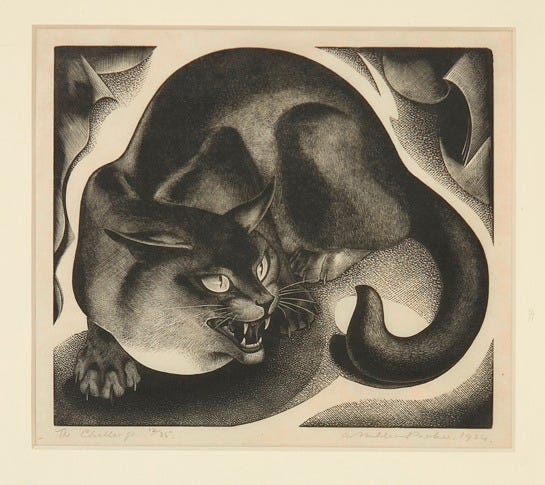
The Challenge, wood engraving, signed, inscribed, dated 1934 and numbered 12/35
15.5cm x 17.5cm
Something to listen to
The actor Alistair McGowan chose H. E. Bates as his subject in the BBC podcast of Great Lives
Something to watch
While looking to see if there were any adaptations of his work online, I discovered this series. Broadcast in 1973, Country Matters is based on the short stories of H. E. Bates and A. E. Coppard, who until now I had never heard of, and which I will now certainly seek out. The series won a BAFTA for Best Drama and features an extraordinary cast, including a young Michael Kitchen in The Four Beauties and Susan Fleetwood, in her screen debut, in The Watercress Girl. Set following the First World War, they are charming, unsentimental tales of country life and the perfect antidote to a troublesome world.
BBCi-player are also showing Stephen Poliakoff’s Caught on a Train with Peggy Ashcroft, which if you haven’t seen, or even if you have, is compelling viewing.
Something to read
The writing of H. E. Bates came to me at the tender age of thirteen, initially through the TV series Love for Lydia, which I adored, and then the book followed, bought with my pocket money. I still have my battered copy and remember writing out passages in my diary of his lyrical descriptions of the natural world, wishing that one day I might write like that! It is a coming-of-age story, narrated by Richardson, a reluctant young reporter, who is tasked with visiting the Aspen Sisters, the local aristocracy. Here he is introduced to their niece Lydia, and a friendship is encouraged so that she might meet the young people of the town of Evensford. At sixteen, she is already a magnetic, fickle, and often cruel young woman, and we watch as the pains of young love play out.
I was nervous of reading it again - would it hold its spell? Within a few pages, I was entranced all over again. The writing is indeed beautiful and I find it perplexing that he has been out of favour for so many years. He was prolific and hugely successful in the 1940’s, yet his popularity meant he was viewed with a snobbishness that associated popularity with vulgarity. I certainly remember the disdain of my English teacher when I proudly declared how I loved his books. His lyrical writing of an English countryside, that was fast disappearing, was pushed aside by the gritty growth of the kitchen sink writers. But he should still be read and was pleased to see that Bloomsbury are reissuing several of his books, though the covers are ghastly. Graham Greene compared his short stories to Chekhov, and his collections are the perfect place to start. I wonder, did anyone else fall for his writing as I did?
I thought I might mention other novels that are set in this interwar period. Consequences by Penelope Lively and Earth and Heaven by Sue Gee both feature female protagonists who are wood engravers, and although I have mentioned the latter before, I unashamedly do so again, because it is certainly one of the best novels I have read.
You might like to read my earlier post on women wood engravers, All in Black and White which features, among others, the work of Gwen Raverat, Joan Hassall and Clare Leighton.
Thank you for reading this post and for joining me here. Please do share or subscribe if you enjoyed it. Your support allows me to continue writing and share these artists whose work it is such a joy to discover.
I look forward to your company again in a couple of weeks. If you haven’t yet explored Through the Woods, I hope this has encouraged you to do so. In recent weeks, some wonderful, unexpected connections and information have emerged in your comments - it is always a treat them, so do drop me a line. If you enjoyed the piece, pressing the heart perks me up and helps others to find it too.
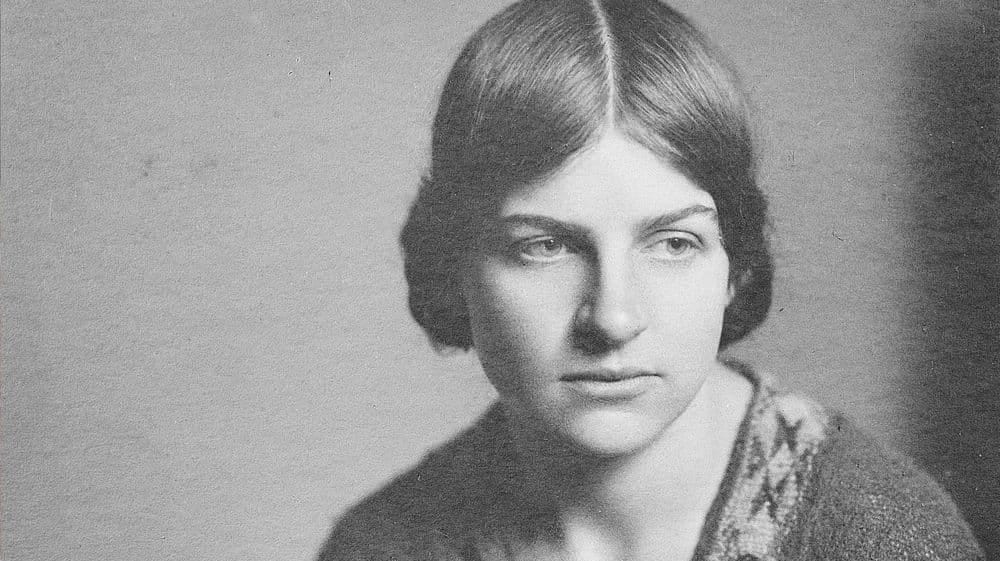
Agnes Miller Parker
And to end, a moment from the garden…
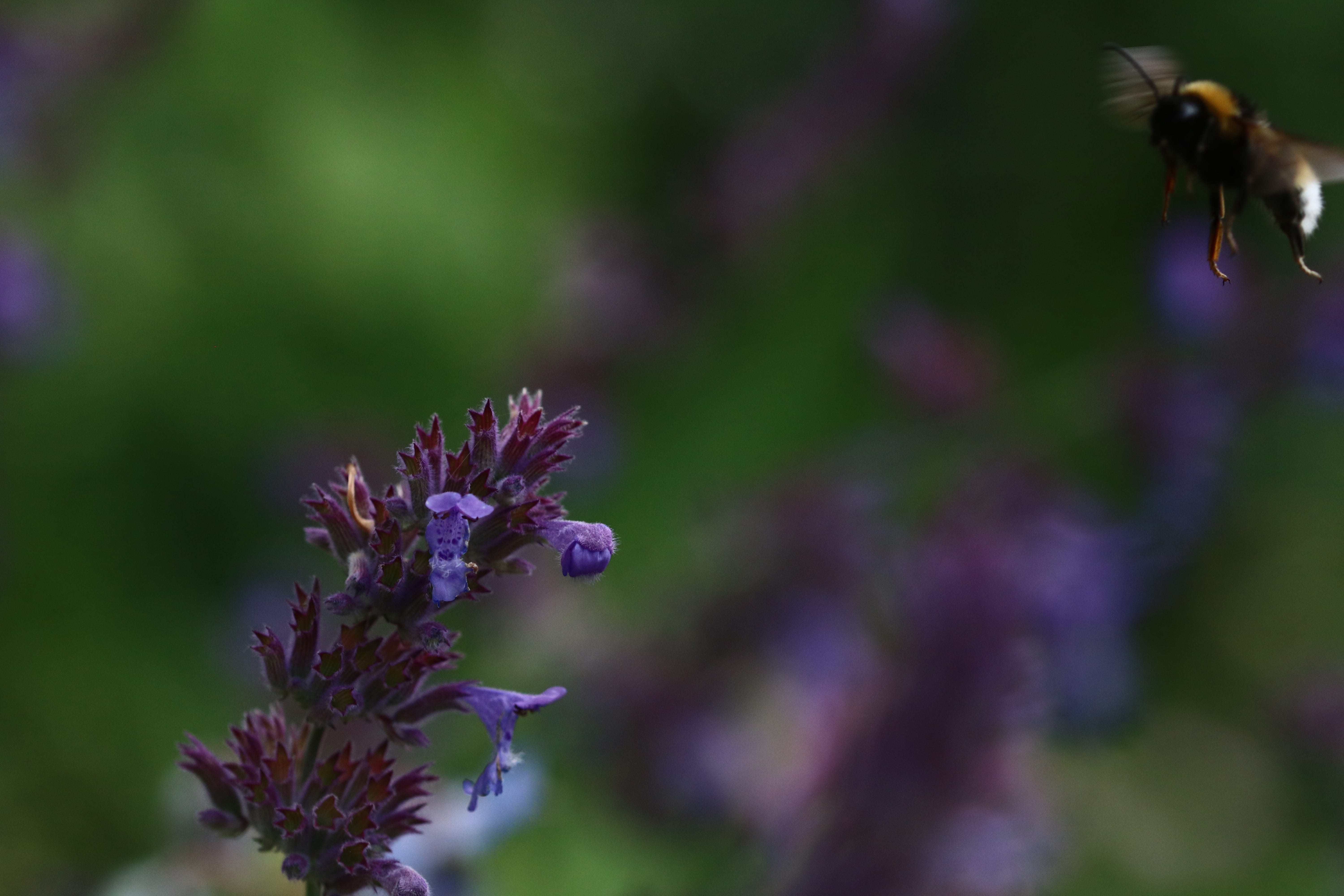
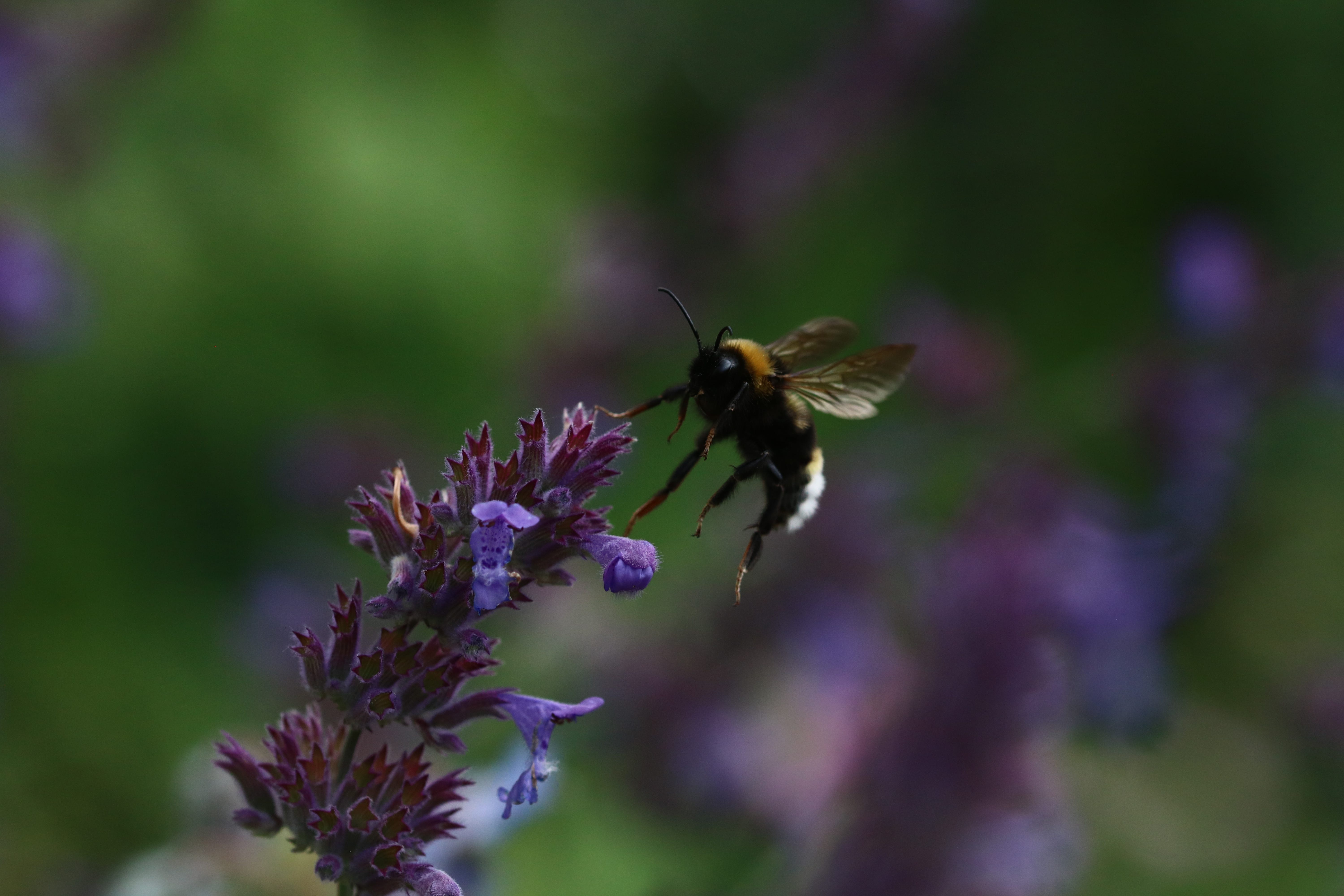
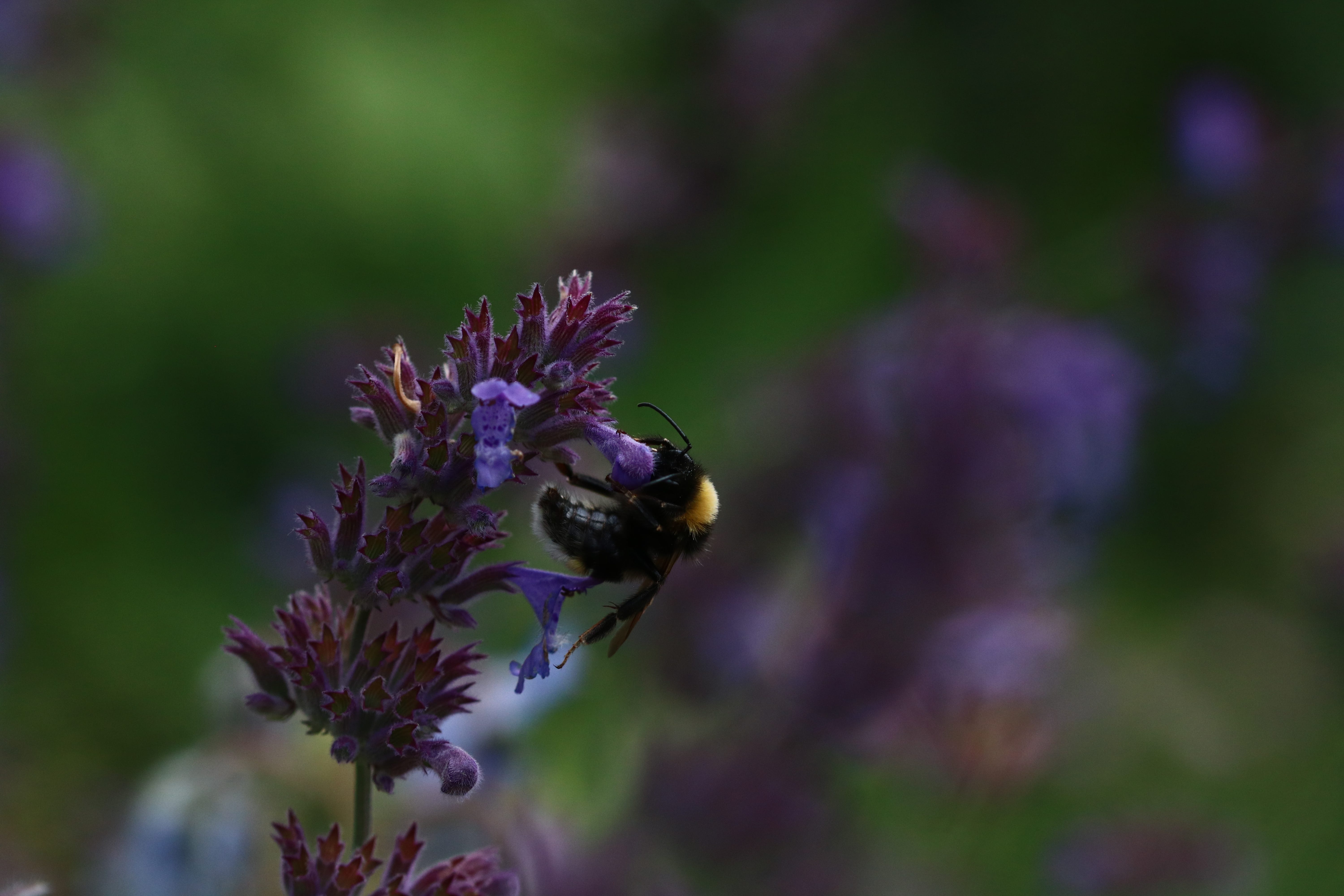
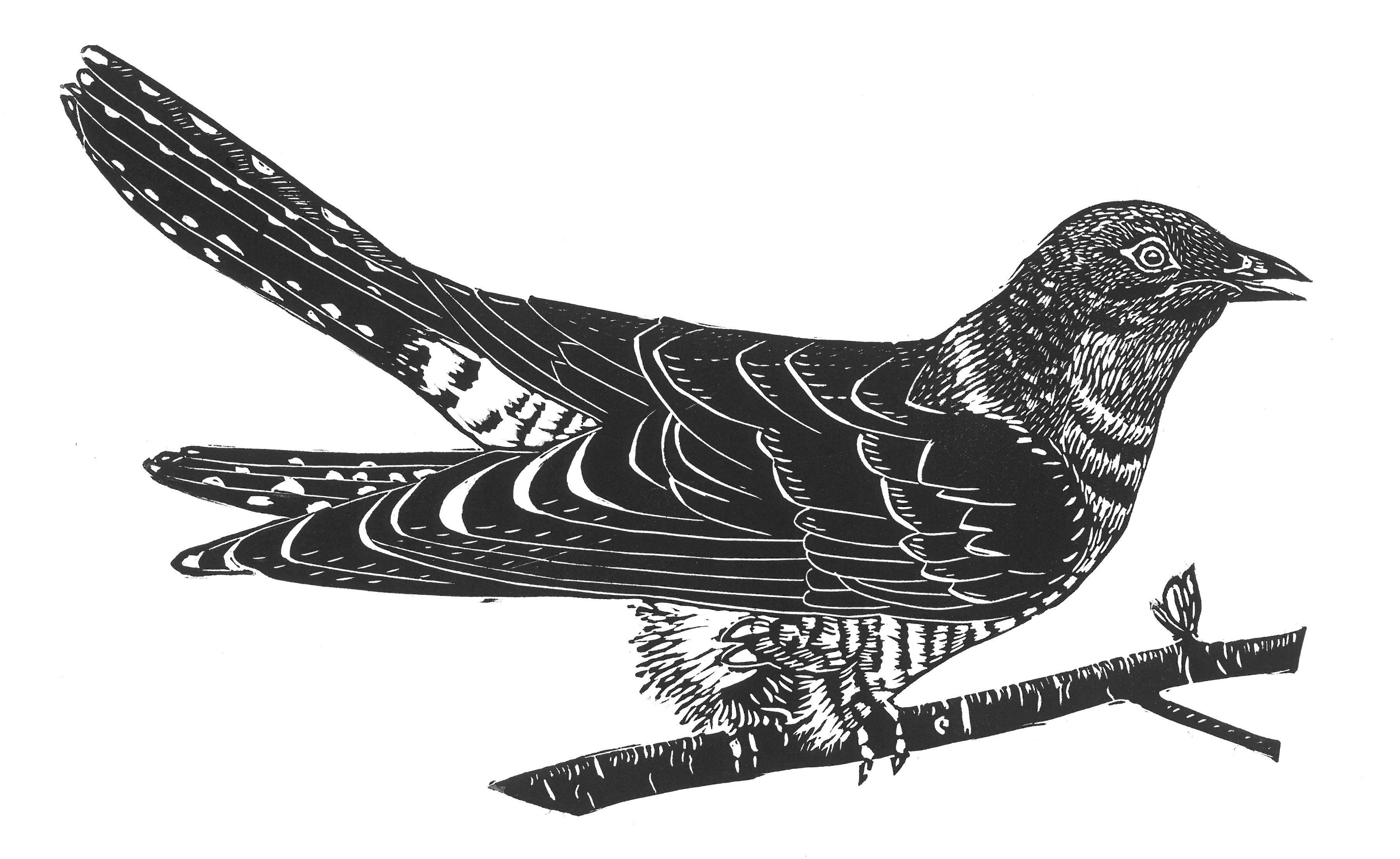
As the Cuckoo is now here - my Cuckoo linoprint
(A reminder: all paid subscribers receive 15% off all artwork in my shop.)
Further Reading
English Wood Engraving 1900 - 1950 - Thomas Balston
Scene through wood: A century of Modeen Wood Engraving - Anne Desmet
Women Engravers - Patricia Joffe[
Drawn to Nature: Gilbert White and the Artists - Simon Martin
Voyaging Out - Carolyn Trant
From “Voyaging Out”, Carolyn Trant, p213
From Laura Beatty’s introduction to the Little Toller edition of “ Through the Woods”, 2011.
Glorious engravings. You have set me on the path of another artist to seek out. Thank you!
Lovely. We used to live in the hamlet of Bwlch-y-Ffridd which attached itself to the side of the Gregynog estate. What a magical place. So interesting to read of an artist with strong connections to the estate.