
Why Drawing Matters
How interruption led to seeing with fresh eyes and why we should all try drawing

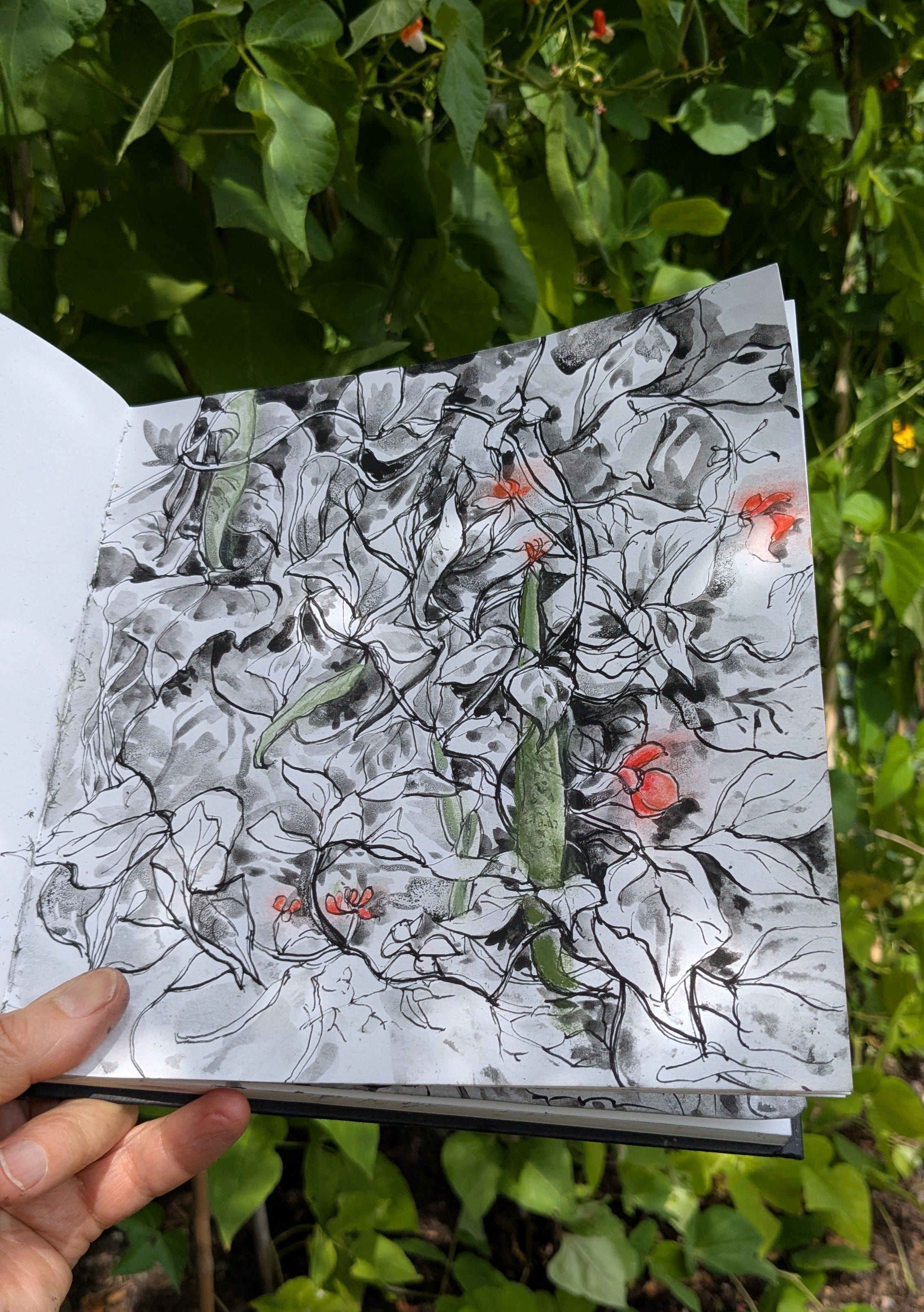
You may have seen my recent Notes where I have been posting drawings made over the last few days. Until recently, drawing was something I did almost every day, so beginning again felt a much greater step than you might imagine. A few months ago the compulsion to draw left me entirely. For many this might not sound significant, but for me, it was.
My head had been filled with so many other pressing matters that this daily activity had been choked out. In the weeks that followed I became distanced, and then lost sight entirely, of how important this was to me. While I felt the loss, returning to it became a growing obstacle, out of all proportion to the act itself.
Looking at Peter Boston’s illustrations for Nothing Said, which I wrote about in my last post, I was nudged back towards drawing. I have always loved the simplicity of pen and ink, and black and white illustration, but these showed a different way of using the materials that produced a softer result, that fitted so well with the quality of Lucy Boston’s writing.
And once I had started, I found the simple act of dipping a nib into ink was exactly the activity I needed to help me deal with the other pressures - it was the very last thing that should have been squeezed out.
Like any muscle that is not used, it atrophies and drawing is no different. While the impulse returned, my ability lagged behind. I looked at my drawing bag of tricks: a candle stub, an old toothbrush, a splayed, stiff paintbrush and wondered what on earth I had done with them? I had charcoal pencils, liquid charcoal and granulation spray. I had three sorts of Indian ink - why? It all felt so alien.
But this interruption in activity has proved to have an unforeseen consequence: it made me see the materials afresh. I wasn’t just relying on tried techniques and familiar supplies, I was finding out again how to use them and this brought a fresh perspective on drawing. I was learning all over again. I started to remember what ink I preferred and why, the importance of tonal value and how the mind can wander, how you can stop looking and you begin to get lazy and draw what you think is there, not what it really looks like at all.
By beginning again, you are not relying on existing knowledge. Instead, you are discovering all over again and that can mean you can find new ways to do things - you take side roads that you had never ventured down before.
With each drawing I remembered a little more. Not only marks that worked, but those that didn’t. For every drawing that I am pleased with, there are many others that leave a taste of disappointment. A drawing may contain a passage of just a few lines that capture what you wanted to achieve, and it is those that spur you on. You turn the page of your sketchbook and start another. And that is the crux, doing another when one has failed, or has not produced the result you wished for. With each drawing your confidence builds and you begin to have a track record where you can see your progress or what needs to be explored further. By using a sketchbook, by dating each drawing, you can chart your progress and have a rich record of what you have seen, what has caught your attention, what has interested you.
And there is another perk of drawing regularly, it calms you, it brings you focus and shuts out other demands.
My start has been in familiar territory - my garden. It was a place I could sit unbothered, record the plants that I loved, watch them changing and be completely absorbed. The quiet and stillness has been very welcome. But there is another forgotten delight that sitting and drawing brings: nature comes to you. Unknown insects land on your page, birds peck at fallen apples and the wild farmyard geese that visit my garden, who are all mouth and no trousers, settle down to sleep a few feet away and become a perfect subject to try to capture. I once had a bumble bee land on my hand years ago as I painted a poppy and such moments you don’t forget.
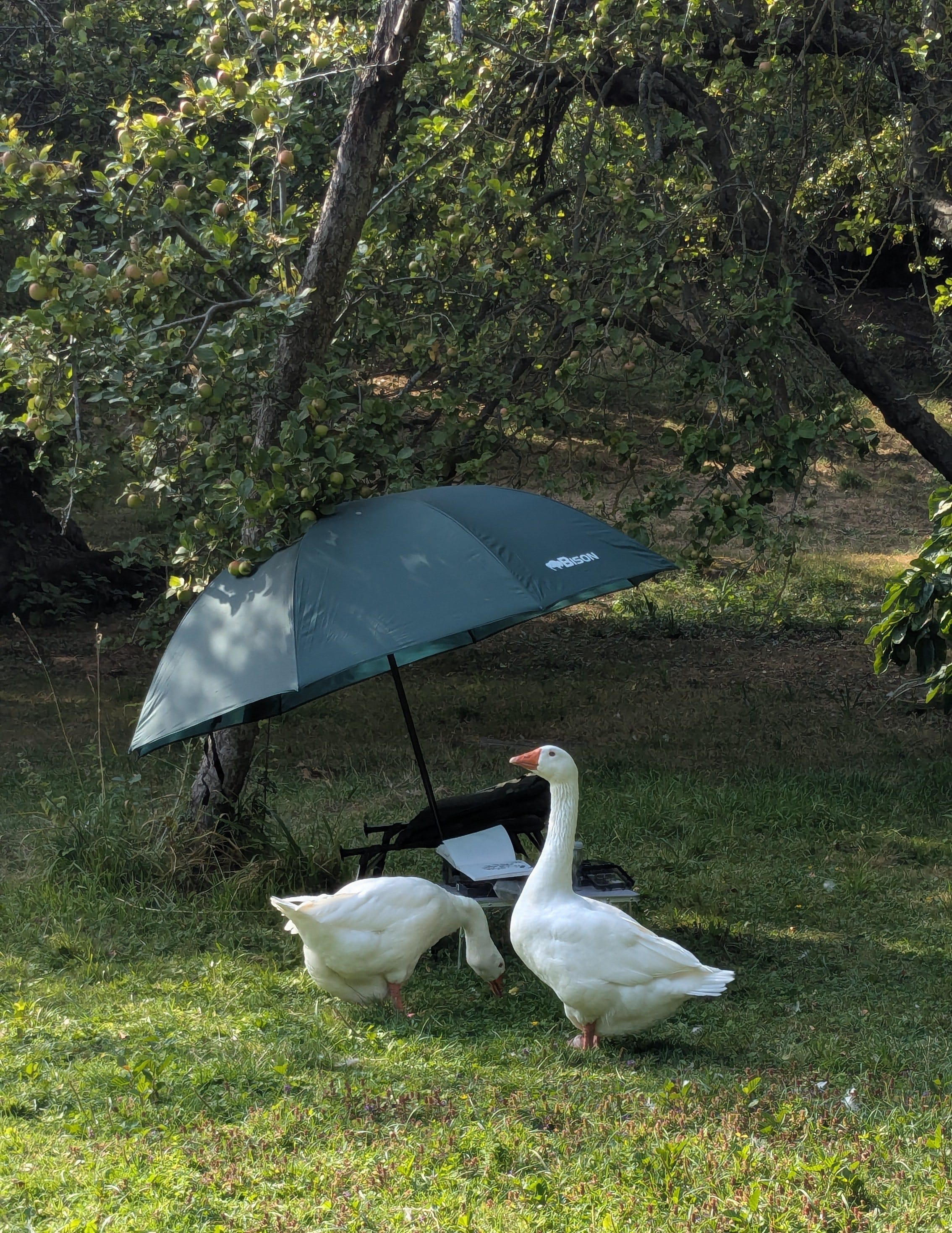
The garden geese examining my sketchbook
The results of your drawings really don’t matter; it is the process and the peace it brings that matters more. The drawing itself almost isn’t the point, it is what is left behind by paying attention. While drawing something that doesn’t meet expectations is frustrating, it is just one drawing and a fresh sheet of your sketchbook is always waiting.
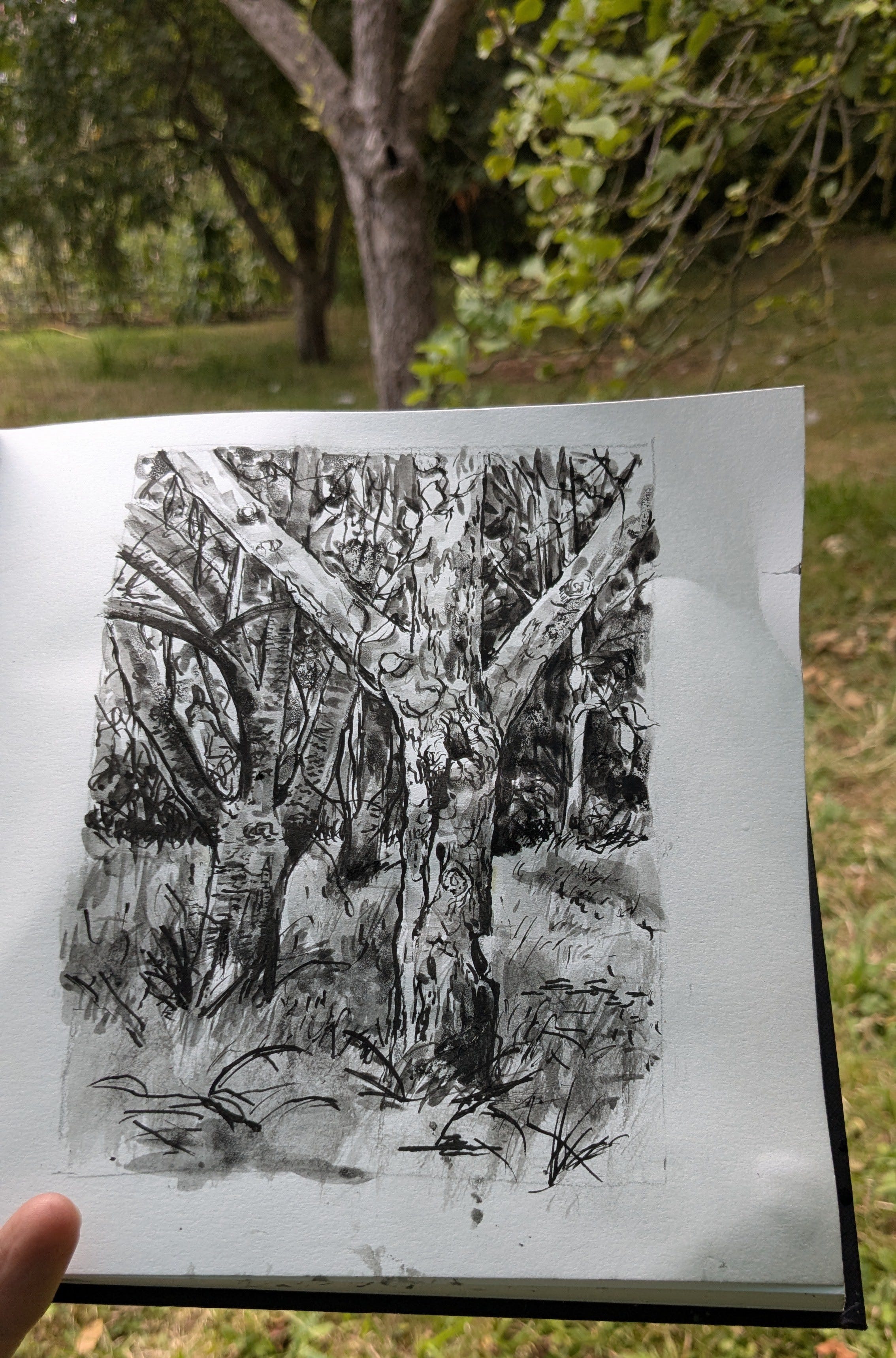
As we grow older, we forget the importance of play, of doing things for their own sake and drawing takes us back to that. By being attentive to those things that bring us joy, by daily looking, we can find a deep sense of pleasure and satisfaction. Following a line on a page can have unexpected outcomes.
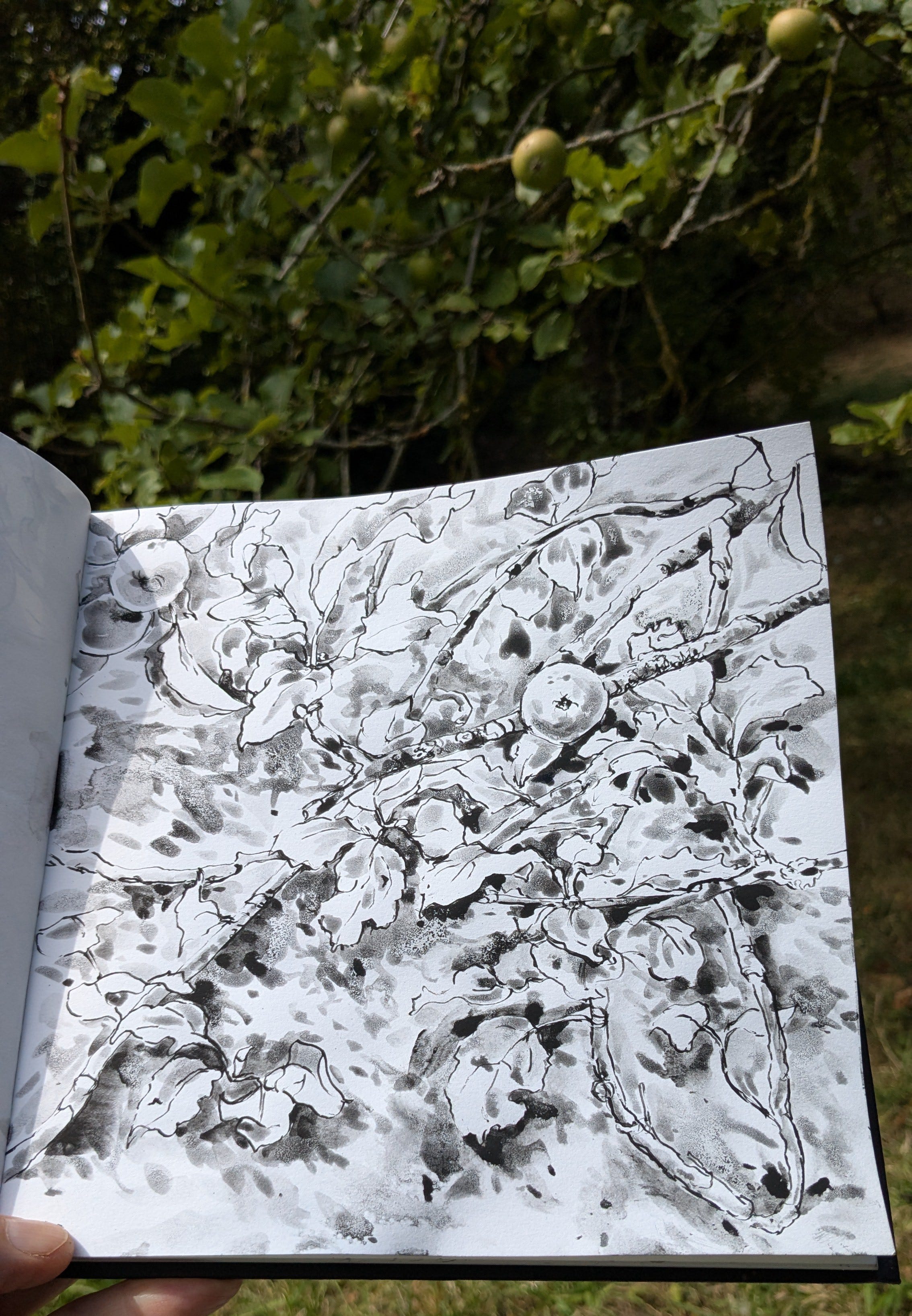
I like black Indian ink and a dip pen, but you can use whatever you have. A soft or hard pencil, a biro, a felt tip pen all bring their own marks and qualities. You don’t need to purchase special materials, although exploring and experimenting is great fun, and your choice may surprise you. I never thought a nib would appeal to me, but I love its variety of mark, the unexpected splodges and how it makes you commit to a line - there is no rubbing out, you just have to make the best of it.
My drawings now are very different from those I made a few years ago. When I developed arthritis, while it limited some things I used to do, it had the unanticipated outcome of being less tied to detail and to focus more on how I felt about what I was seeing. Restrictions can sometimes produce a more interesting result.
By a piece of happy serendipity, in June’s post this week, she mentions that she has bought a sketchbook. She expresses exactly why beginning matters:
I haven’t drawn a line since I was in school fifty years ago, I couldn’t draw then and probably still can’t - but I am going to try. Every day. I don’t care if it is crap. Sometimes it hurts to know you can’t change the bad stuff, just because you really, really want to. But I can do some things that might at least make me feel a little better.
This wasn’t the post I expected to write this week, but I hope you won’t mind the diversion. Next time I will be returning to my neglected women artists, but it has been good to realise quite why these women, and what they did, matter so much to me. The act of drawing is inextricably fused with those who make drawings, and why they need to be remembered and celebrated. If this post encourages one person to pick up that pen, pencil or biro, then it has done its job. Drawing is far more than creating a picture, you see life differently when you try to draw it, the attention you bring will alter the way you see the world and that is a gift beyond value.
In future posts, in addition to my usual recommendations, I will include the occasional piece on art and drawing books that I have found helpful and inspiring, beginning with this:
Lessons for Young Artists by David Gentleman
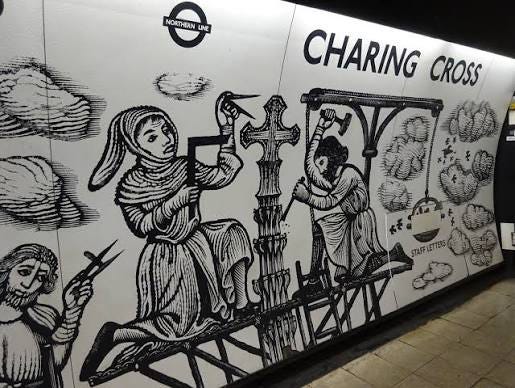
Many of you will recognise the work of David Gentleman, even if his name is unfamiliar. His work has adorned many beautiful stamps for the Royal Mail, they dance across the walls of Charing Cross Tube Station and he has produced several wonderful volumes of his sketchbook pages from drawings made around the world. He is versatile and innovative, and at 96 years old, he knows a thing or two about drawing. This small book is a charming and fascinating compilation of his distilled knowledge and provides reasons to pick up a pencil, whatever your age. It is straightforward and down to earth - there is nothing fanciful about creativity, he advocates beginning small, following your own inclinations, and most of all, enjoying it. As a taster, this is how it begins:
Don’t wait for inspiration to strike.
Just get on with it. There’s no magical moment when some unseen force tells you to do this or that. Instead of looking for inspiration, just pause and look at what’s in front of you. If something catches your eye, try drawing it there and then. It needn’t be an extraordinary scene or a particularly beautiful object.
Wise words indeed. If, like June, you have not drawn for years, don’t begin with a grand subject, choose something small and ordinary - perhaps something that means a great deal to you. Ten minutes is all you need. You may find, as I did, that that ten minutes goes on and you have recovered something far more valuable than a drawing.
One piece of advice I would add is to choose decent paper - it makes more of a difference than you might think. A smooth, robust surface makes drawing easier. I use Seawhite sketchbooks which are reasonably priced, and don’t feel too precious. I love Derwent pencils, an HB or 2B is all you need, or, if you want to push the boat out, Blackwing are beautiful to draw with.
You can see him talking about his work and sketching in London here.
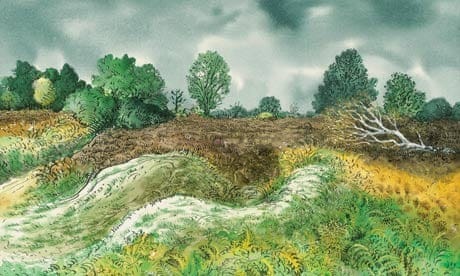
One of David Gentleman’s watercolours of Suffolk. You can see more in his book, In the Country
In case you are tempted to pick up a sketchbook, here are a few of the artists I follow on Substack whose work and approach continually inspires and encourages me:
Cathy Cullis - Studio Notes.
I have followed Cathy for years. Her beautiful, distinctive work is a joy. She generously shares her creative playfulness and I love seeing how her colour experiments and collages evolve into paintings.
Jo Blaker - Scribbles in the Sky.
Jo is just the person to persuade you to go out drawing in the landscape. She runs online classes with the London Drawing Group and her fresh, exploratory approach makes drawing outdoors feel accessible to anyone .
Samantha Clark - The Life Boat.
Samantha is based on Orkney and her exquisite paintings reflect the island that inspires them. Her lyrical writing about place, her creative practice and her need to paint are explored in weekly posts that are a pleasure to read.
Helen Stephens - Pencil Pals
You can follow her hashtag #walktosee prompted by weekly drawing suggestions. Helen is a founder of the brilliant Good Ship Illustration and once shared the best drawing advice I have ever heard: if you are uncertain about a drawing, place it in a “magic drawer” and look at it the next day. The distance really helps you to see your work more objectively.
Lucia Leyfield - The Ink Pad
Lucia runs brilliant, enthusiastic online courses on sketching and nature and creates beautiful sketchbooks that are full of observation and delight. They will certainly inspire you to keep a sketchbook of your own.
Something to Listen to
I discovered three linked radio plays on BBC Sounds that I loved. Called Yeartides, by the writer Ben Lewis, each one is centred around the Celtic festivals of Samhain, Beltane and Lughnasadh, of which I know little, but now wish to explore further. If anyone has any suggestions for reading, let me know!
Something to Read
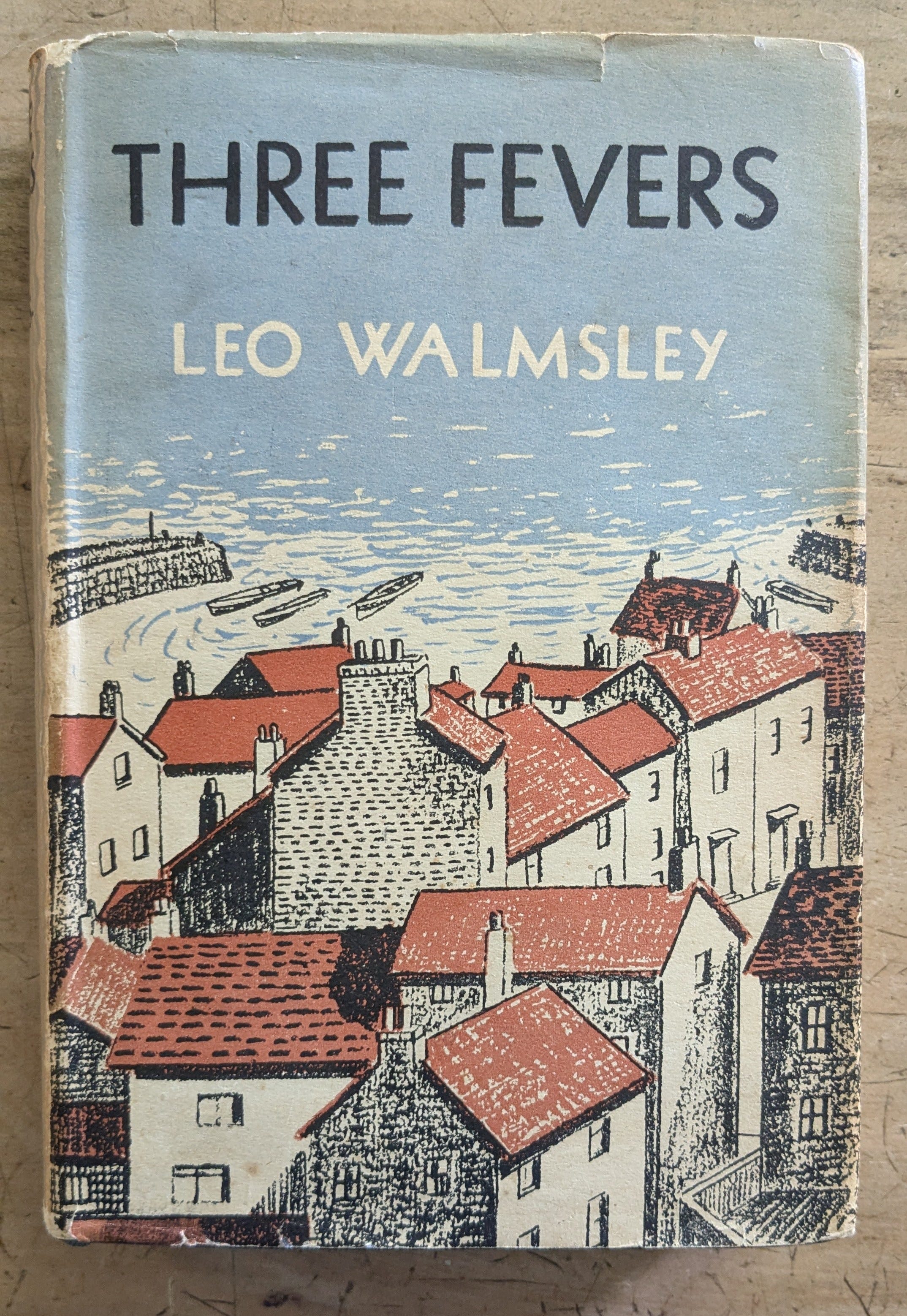
I love this book cover - sadly, artist not credited.
Three Fevers by Leo Walmsley. Published in 1932, and set in Robin Hood’s Bay, follows the working life of two fishing families and seemed the perfect choice following my visit. Walmsley grew up there, and though fiction, much of the story is based on his own experience of living in the fishing community. Simply but powerfully written, he spins a wonderful yarn, and I never imagined I would be so absorbed by such a subject. The plot is slim, but the daily necessity of making an income from the seas, the hardship that brings and the risk involved in sailing out in all weathers, makes compelling reading. I thoroughly enjoyed it.
It seems such a pity he is so little known now. I knew that there was a plaque in the Bay marking the house where he grew up, but after walking up and down King Street defeated, I finally asked where it was. It seems ivy has now grown over the plaque, and no one seemed bothered to uncover it. He wrote two further novels about these families and I look forward to reading both.
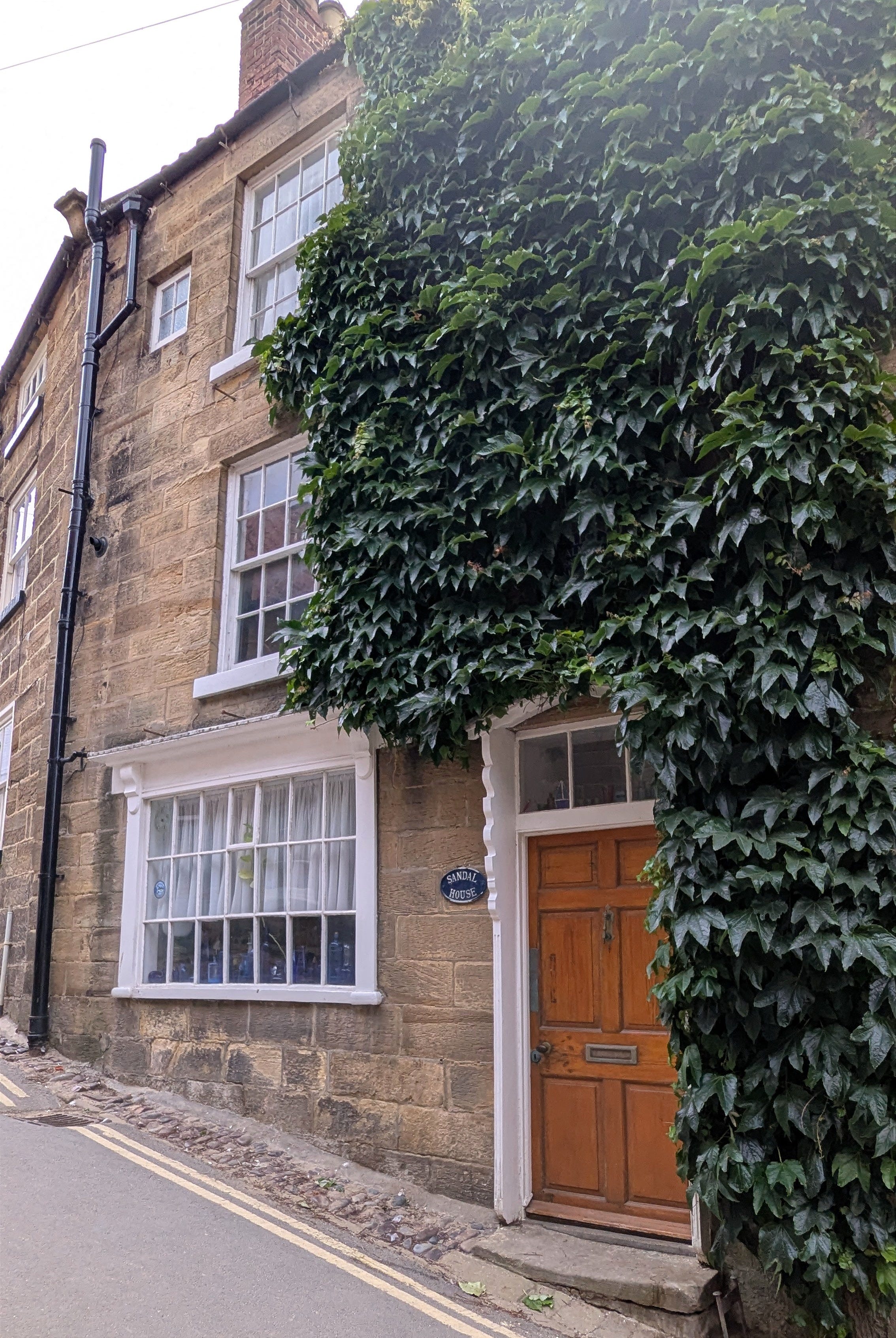
Sandal House, in King Street, Robin Hood’s Bay, home of the writer Leo Walmsley from 1894 to 1913.
Something to Watch
On Saturday, BBC4 paid tribute to Geoff Hamilton, the late presenter of Gardener’s World, with an evening of programmes celebrating his life and work. If I have one gardening hero, it is him. Everything stopped at 8.30 on Friday evenings to watch his accessible, inspiring and cost conscious approach to growing and creating a garden. A pioneer of organic gardening, I remember well his concerns about the use of glyphosate, and the use of peat compost, long before it was considered relevant. Watching him again, took me back to making my garden in Norwich from scratch, with the words, “What would Geoff do?” always in mind.
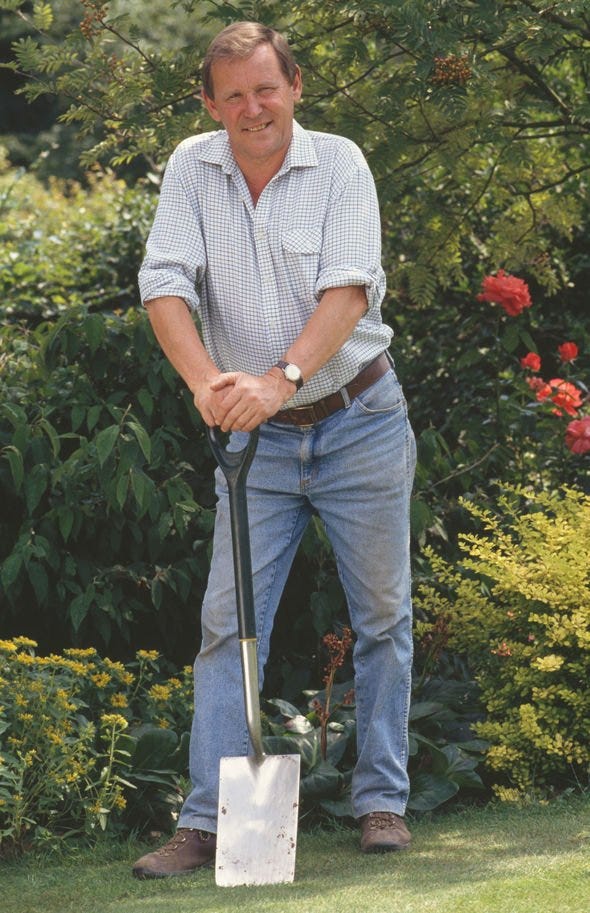
Here is a favourite programme, with the cottage gardener, George Flatt.
If you would like to see more of my sketchbook drawings from over the years, I have a selection on my website, you can see them by following the link.
Next week I shall be back with my monthly Gathering post for paid subscribers. It will appear this time on Tuesday, so look out for it then. Thank you for your company and support here and, if you do pick up a pencil, I would love to hear from you, or indeed about anything else!
(And if you enjoyed this post, please do press the heart, it really helps my work to be seen.)
I hadn’t drawn properly for a while. I went to art school, always had a sketchbook with me. Even as a costume designer I haven’t drawn much for work.
I joined the Drawing Is Free portrait zooms a few weeks ago. The drawings were terrible. I was mortified but then I decided to just show up and draw and steadily they are getting less cringy.
I have assembled all of my old art materials including a watercolour palette from the 80s! My sketchbook sits in the kitchen waiting to go into the garden or draw the cats and dogs. I now know that drawing is what makes me feel creatively alive. Thank you for sharing and all of the recommendations.
Much of what you say about drawing is also true of writing. Attention is the wellspring.